What Is NYC Local Law 157?
Local Law 157 of 2016 amended the NYC Housing Maintenance Code and Building Code to require natural gas detecting devices in covered residential buildings, alongside existing smoke and carbon monoxide detector rules. The law took on renewed urgency after fatal gas explosions in East Harlem and the East Village, and it only became enforceable after the industry standard NFPA 715 was published in 2022 and DOB adopted installation rules effective February 14, 2024.
Key NYC Requirements at Glance
| Requirement | What the Law Mandates |
|---|---|
| Compliance deadline | Full installation by January 1, 2027. The date was postponed by Local Law 102 of 2025 and confirmed after DOB identified at least four distinct manufacturers of compliant battery-powered alarms. |
| Covered buildings | Class A multiple dwellings (apartment buildings, co-ops, condos), Class B multiple dwellings (hotels, rooming houses, dorms), and certain private (one- and two-family) dwellings with gas piping or gas service. |
| Placement | Same room as fuel-gas-burning appliance, 3 to 10 feet horizontally from the appliance, and within 12 inches (1 foot) of the ceiling. If gas piping runs through unit, alarms protect sleeping-room entrances within 15 feet. |
| Installation | Battery-powered and plug-in units may be installed by the property owner, maintenance staff, or occupants—no licensed electrician required. Hardwired systems require licensed electrical contractor. |
| Approved standards | Devices must be listed and labeled to UL 1484 (or UL 2075 where applicable) and installed per NFPA 715-2023. |
Why the AJ-989 Is Strong Fit for LL157 Compliance
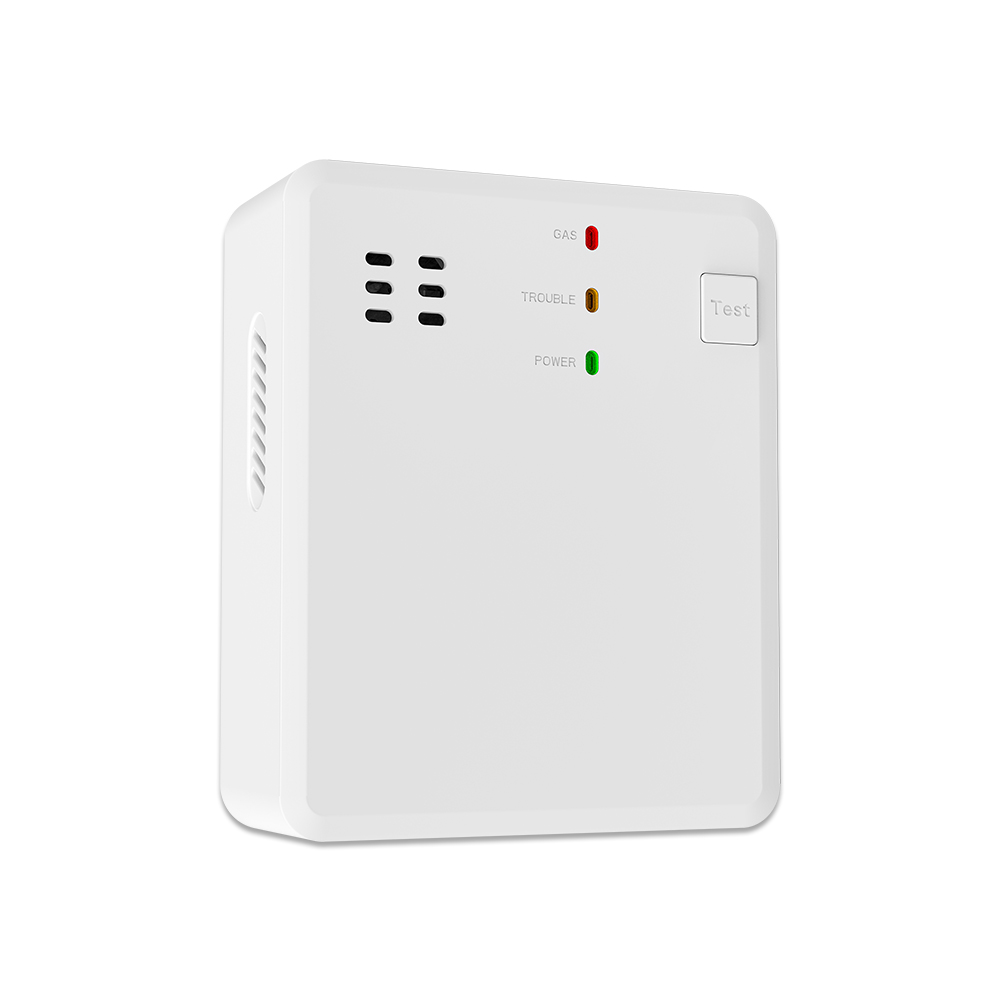
The AJ-989 is ANKA’s residential natural gas alarm engineered for U.S. building-safety compliance. It detects methane (natural gas) at an 10% LEL alarm threshold and is built around sealed 10-year battery and sensor dual-life design, minimizing maintenance across the device’s useful life.
AJ-989 Product Snapshot
| Specification | Detail |
|---|---|
| Model | AJ-989 |
| Target gas | Natural gas / methane (CH4) |
| Compliance | UL 1484 listed; NFPA 715 installation-readycitation11 |
| Power | DC 3V built-in lithium battery (CR17505 × 3), 10-year battery life |
| Sensor life | 10 years |
| Alarm threshold | 10% LEL |
| Alarm output | >85 dB at 3 m (buzzer + LED flash) |
| Mounting | Wall or ceiling; within 12 in. of ceiling per LL157/NFPA 715 |
| Coverage | Up to ~25 m² (≈270 sq ft) per unit |
| Operating range | −10 °C to +50 °C; <93% RH, non-condensing |
Key Advantages for Property Owners and Contractors
- Zero compliance risk UL 1484 certified and NYC Local Law 157 aligned, covering mainstream U.S. building safety inspection standards.
- Ultra-low maintenance 10-year battery and sensor dual lifespan reduces post-installation maintenance and replacement costs versus traditional detectors.
- Stable and reliable Anti-interference design and low false-alarm rate for 24/7 uninterrupted monitoring.
- Batch-installation friendly Compact battery-operated design requires no wiring—simple, fast installation suitable for large-scale building projects.
- Long-term value One-time installation, 10 years of stable protection—maximizing building safety return on investment.
Where and How to Install the AJ-989 Under LL157
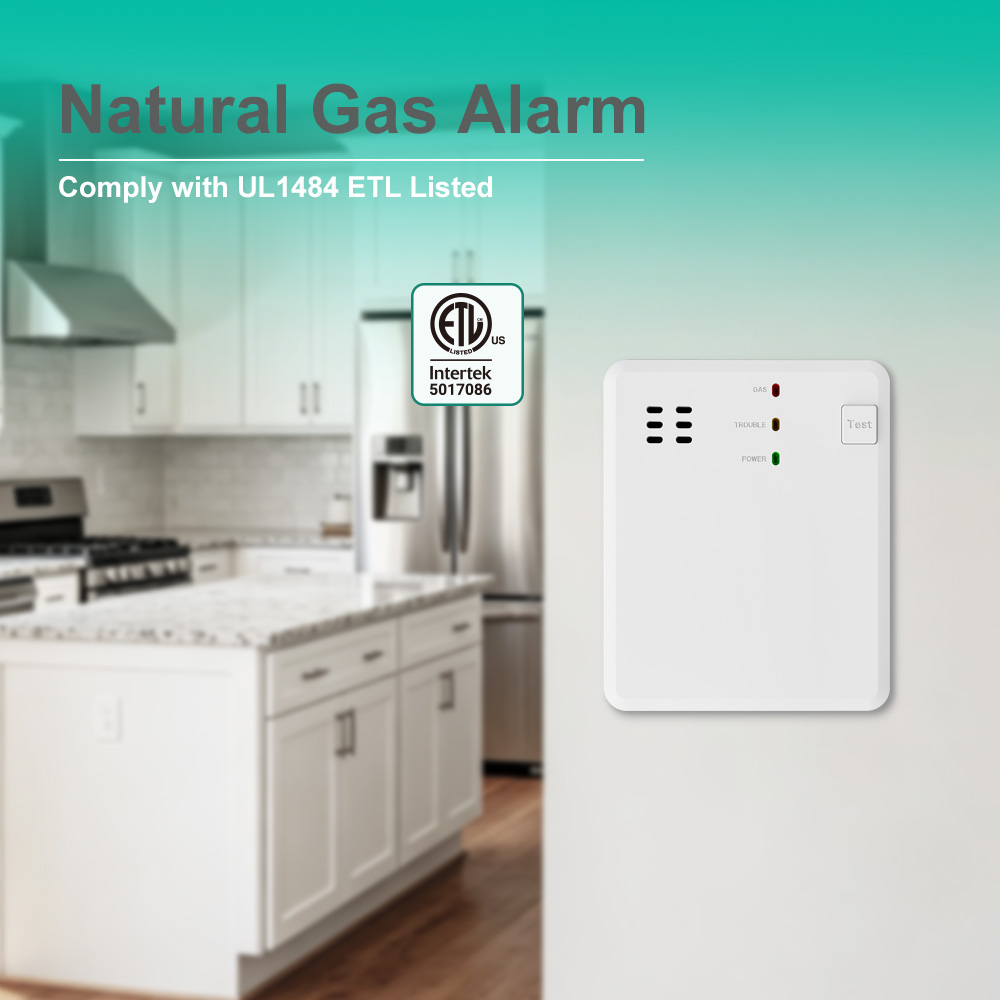
- Locate the gas appliance (stove/range, gas dryer, water heater, boiler). The alarm must be in the same room as the fuel-gas-burning appliance.
- Measure horizontally 3 to 10 feet from the appliance to choose the mounting point.
- Mount high Install on the ceiling or on the wall within 12 inches of the ceiling. Natural gas is lighter than air and rises, so high mounting supports early detection.
- Avoid false-alarm zones Keep the unit away from fresh-air drafts (doors, windows) and follow the manufacturer’s instructions when space constraints apply.
- Test after install Press the test button to confirm the audible/visual alarm, and keep record of the installation date and the device’s rated life.
Other Compliant Alarm Options to Consider
DOB’s confirmation of at least four distinct manufacturers means owners have growing market of compliant choices. Two widely referenced options include
- DeNova Detect — Offers 10-year sealed battery-powered methane alarms with voice warnings and high resistance to false triggers.
- Nexelec VIGAS — ETL-listed, UL 1484 compliant sensor with 10-year lithium battery and digital installation logs for portfolio recordkeeping.
Whichever brand you select, verify the UL 1484 listing mark on the label and confirm NFPA 715-2023 installation compliance before purchase.
Frequently Asked Questions
Is the AJ-989 compliant with NYC Local Law 157?
The AJ-989 is UL 1484 listed and designed for NFPA 715 installation, matching the core device and placement standards LL157 adopts. Always confirm the specific model’s current listing and label before specifying it for project.
What is the deadline to install natural gas alarms in NYC?
The current, confirmed deadline is January 1, 2027 for all covered residential buildings. The deadline was previously subject to possible extension, but DOB’s identification of at least four compliant manufacturers made the 2027 date final.
Can I install the AJ-989 myself?
Yes—because it is battery-powered, NYC rules allow installation by the building owner, maintenance personnel, or the dwelling occupant without licensed electrician.
How many alarms does my building need?
Class A multiple dwellings require one or more natural gas alarms in each dwelling. Class B buildings may either install alarms in each dwelling or use line-operated zoned natural gas detecting system in public corridors and common spaces.