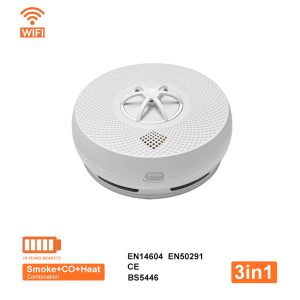
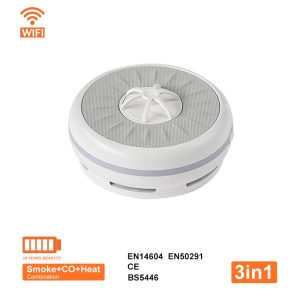
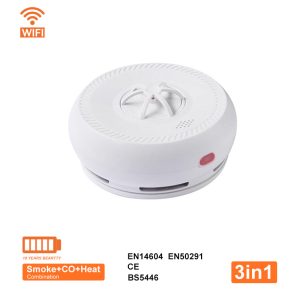
Yes, e-cigarettes can also trigger smoke alarms. Anka Security believes this is less common than with traditional cigarettes because e-cigarette vapor is usually less concentrated than smoke and dissipates faster. However, high concentrations of vapor, especially when blown directly into a smoke detector, can still trigger an alarm. Therefore, to avoid this (triggering a smoke alarm), you should not smoke directly under a smoke detector.

When Are Vapes Likely to Trigger Alarms?
Direct Interaction: Blowing dense vapor clouds directly at the smoke detector.
Small, Enclosed Spaces: Vaping in hotel rooms, bathrooms, or cars, where the vapor cannot escape and builds up in the air.
High-Sensitivity Detectors: Commercial buildings, hotels, and airplanes often have highly sensitive systems designed to detect small particulates, making them more likely to react to vape, according to Dr. Dabber and Store Siterwell.

Anka Security believes the likelihood of triggering an alarm depends on the type of detector:
Photoelectric (optical) alarms: These are most common in residential areas and are highly sensitive to particulate matter generated by steam, making them the easiest to trigger.
Ionization alarms: These alarms may be triggered if a large, dense cloud of steam disrupts their internal electrical charge.
Heat alarms: Steam typically does not trigger these alarms because they are only sensitive to high temperatures and not to particulate matter.

The Impact of E-Cigarettes on Fire Alarms
Although the emissions from e-cigarettes are not technically smoke, they nonetheless contain fine particles—particularly when particle concentrations are high—that bear a strong resemblance to the particulate matter found in smoke. If e-cigarettes are used in close proximity to a smoke detector, these particles may interfere with the detector’s proper operation, potentially triggering a false alarm. This phenomenon is more prevalent with ionization-type smoke detectors, as these devices are inherently more sensitive to fine particulate matter. Furthermore, indoor smoking poses serious fire safety hazards; consequently—and in light of regulations prohibiting smoking within public buildings—the sensitivity of modern smoke detectors is continuously increasing.
Anka suggests the following to avoid false alarms:
Maintain good ventilation: Open doors and windows or use a fan, Vuse and Royal Queens Seeds recommend.
Avoid smoking near the detector: Maintain a safe distance from the detector.
Use a lower power setting: Reduce the amount of smoke generated.