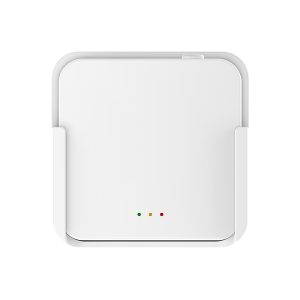
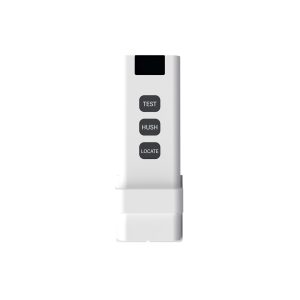
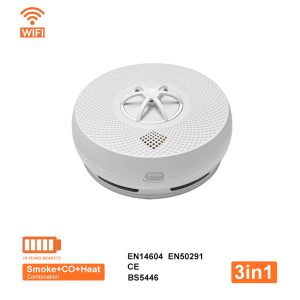
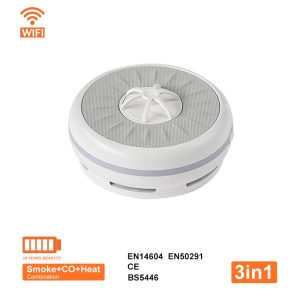
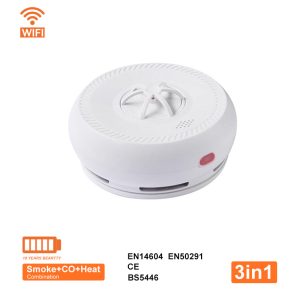
An EN 14604 certified smoke detector is a device that meets the European standard for smoke alarms used in households, ensuring it meets quality, reliability, and performance criteria for early fire detection. This certification means the detector has passed specific tests for features like a loud alarm, reliable smoke detection (often photoelectric), and manufacturer instructions for proper use and maintenance. It’s a guarantee of a certain level of safety for residential use.
Smoke detectors are mandatory in many European countries, including Austria, Belgium, Denmark, Estonia, Finland, France, Germany, Ireland, the Netherlands, and the United Kingdom. These laws exist because smoke detectors are highly effective at saving lives by providing early warning of a fire, which is crucial for safe evacuation and preventing fire-related deaths and injuries.

Key features of EN 14604 certified smoke detectors:
Mandatory European standard: The EN 14604 standard applies to smoke alarms for domestic use across Europe, ensuring a consistent level of quality.
Reliable smoke detection: Devices use sensors like photoelectric ones to detect smoke particles and are designed to be highly reliable.
Loud alarm: They must produce a loud alarm, typically at least 85dB, to effectively wake people even when they are asleep or in noisy environments.
Manufacturer’s instructions: The certification includes requirements for clear instructions on installation, testing, and maintenance to ensure the device functions correctly over its lifespan.
Passed performance tests: The certification demonstrates that the product has met performance criteria set by the standard, such as its ability to detect different types of fire signatures.
Additional features: Many certified detectors include features like long-life or sealed batteries (e.g., 10-year battery), and a mute function for temporary silencing of alerts, such as low-battery warnings.