Are Natural Gas Alarms Required in NYC? Local Law 157 Explained (2027 Deadline)
Yes. Natural gas alarms are required in all residential buildings in New York City under
Local Law 157 (LL157). The compliance and enforcement deadline has been extended to
January 1, 2027. If your property has a natural gas appliance—stove, boiler, water heater,
or dryer—you must install a compliant methane detector before that date.
in the same room as each gas appliance. Battery, plug-in, or hardwired units are all acceptable if they meet
the standard.
What Local Law 157 Actually Requires
Enacted to close the gap left by carbon-monoxide-only rules, LL157 mandates natural gas (methane) detection
in dwelling units served by gas equipment. Key points:
- Applies to: all NYC residential properties—one-/two-family homes, multifamily rentals, condos, co-ops.
- Trigger: any occupied space containing a permanently installed natural gas appliance.
- Deadline: full compliance expected by
January 1, 2027(DOB/HPD enforcement ramps through this date). - Detector type: methane-specific, not CO, not propane-only.
Approved Device Standards
Every alarm must conform to recognized safety certifications:
- UL 1484 or UL 2075 listing for combustible gas detection.
- Installed per NFPA 715 (Installation of Fuel Gases Detection Systems).
- Audible alarm ≥ 85 dB at 10 ft.
- Response threshold around 10% LEL for methane is typical for LL157-grade residential units.
Correct Placement Rules (NFPA 715 + LL157)
Natural gas is lighter than air, so methane rises and collects near the ceiling.
| Rule | Requirement |
|---|---|
| Location | Same room as the gas appliance (kitchen, boiler room, laundry, etc.). |
| Horizontal distance | 3 to 10 feet from the appliance—close enough to detect, far enough to avoid nuisance trips. |
| Height | On the ceiling or wall-mounted within 12 inches (30 cm) of the ceiling. |
| Avoid | Dead-air corners, behind doors, directly above burners, HVAC supply streams, high-humidity zones. |
Who Can Install It
- Battery-operated or plug-in alarms: can be installed by the property owner, building staff, or tenant (per owner approval).
- Hardwired alarms: must be installed by a NYC Licensed Electrical Contractor with proper DOB permits and sign-off.
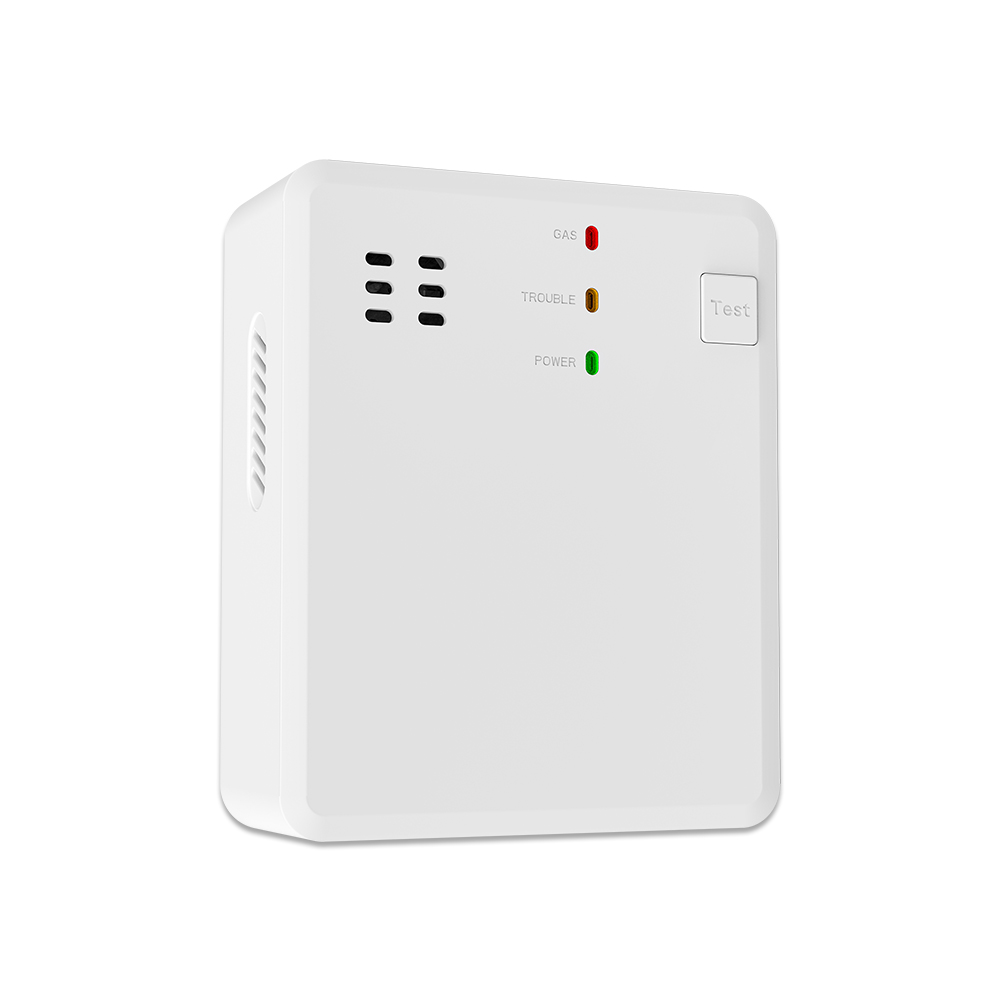
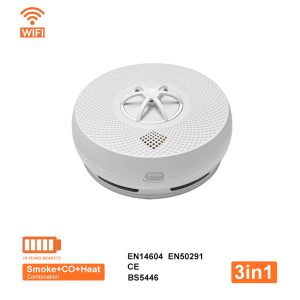
Example of a Compliant Device: ANKA AJ-989
The ANKA Natural Gas Alarm AJ-989 is a 10-year sealed-battery methane detector built to align
with LL157 expectations:
- Meets UL 1484 for residential natural gas detection.
- 10-year built-in lithium battery and sensor life—no annual battery swap.
- 85 dB audible alarm.
- Triggers at ~10% LEL methane.
- Ceiling/wall mountable within the 12-inch rule.
Note: Always verify the individual unit’s UL label and packaging states “natural gas / methane”
before purchase—some dual-purpose alarms exclude methane or lack UL 1484.
Common Owner Mistakes
- Buying a CO-only alarm and assuming it covers gas leaks—it does not.
- Mounting the detector next to the stove (<3 ft) causing false alarms.
- Putting it low on the wall like a CO detector—methane rises, so ceiling proximity matters.
- Waiting until a DOB inspection in 2027 and paying rush-install pricing.
FAQ
Do I need one alarm per appliance or per room?
Per room with gas equipment. If a kitchen has a gas range and a separate gas dryer sits in a different room,
each room needs its own detector.
My building already has a gas leak sensor at the meter—does that count?
Not usually. LL157 targets in-unit / in-room detection for occupant warning. Meter-level
commercial sensors do not satisfy the dwelling-unit rule.
Is there a fine if I miss the Jan 1 2027 deadline?
DOB/HPD can issue violations during inspections, and lenders or insurers may flag non-compliance during
refinance or policy renewal. Installing in 2026 is the low-risk path.

Quick Compliance Checklist
- ☐ List every room with a natural gas appliance.
- ☐ Buy UL 1484 / UL 2075 methane alarms only.
- ☐ Mount 3–10 ft horizontally from appliance, within 12 in of ceiling.
- ☐ Keep proof of purchase + UL certificate for each unit.
- ☐ Hardwired? Hire licensed NYC electrician with permit.
- ☐ Done before January 1, 2027.