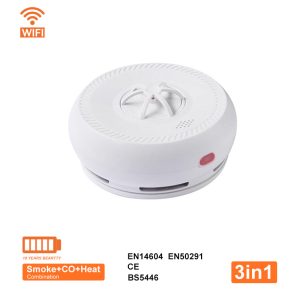
In the fast-paced rhythm of modern life, renters, residents of older housing complexes, and families looking to upgrade their smart home systems often face a common dilemma: How can one install a reliable fire warning system in a residence without undertaking complex renovations?
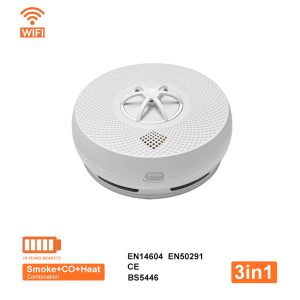
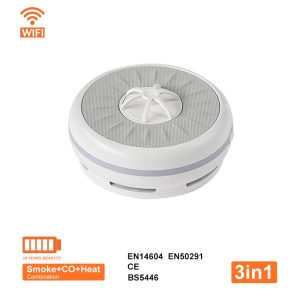
The answer lies in—portable smoke alarms. Thanks to three core advantages—”battery-powered,” “wireless connectivity,” and “simple installation”—they are fast becoming the top safety choice for an increasing number of households and renters.

Wireless Freedom: Breaking Free from the Constraints of Wiring
Traditional smoke alarms typically require integration into a home’s electrical circuitry. For renters, this is often a near-impossible task; for homeowners with beautifully finished interiors, routing wires through walls means incurring high costs and causing disruptive damage to the decor.
The advent of portable smoke alarms has completely shattered these physical limitations:
• Flexible Whole-Home Deployment: Unfettered by wires, you can install these devices in bedrooms, living rooms, kitchens, or even garages—simply place them wherever protection is needed.
• Take It With You: When your lease ends or you move to a new residence, simply detach the unit to continue using it in your new home. It leaves behind no installation marks and ensures you don’t lose your investment in the equipment.

Minimalist Installation: A “3-Minute Project” Anyone Can Complete
“Designed for easy installation” is not just an empty slogan here. These products typically feature user-friendly, drill-free designs:
• Adhesive Mounting: Most portable alarms come with strong double-sided adhesive on the back; simply peel off the backing paper, align the device with your desired spot, and press to secure it in place.
• Magnetic Mounting: Some premium models feature a magnetic base; simply affix the base to the wall, and the alarm will snap into place when brought near—making it effortless to detach for battery replacements or cleaning.
No electrician is required, and no power drill is needed—even a woman living alone can complete the installation the moment the package arrives.

Long-Lasting Power: The Peace of Mind That Comes with Battery Operation
As a portable device, battery power is truly its soul.
• Ultra-Low Power Chips: Most modern portable alarms utilize low-power sensors; a single CR123A lithium battery or two AA batteries are often sufficient to power the device for 1 to 3 years.
• Smart Alerts: When the battery level runs low, the alarm emits a specific “beep-beep” warning tone—or, in conjunction with a companion app, sends a push notification to your smartphone—to remind you to replace the batteries promptly, thereby preventing any lapse in security coverage caused by power failure.
Wireless Interconnectivity: Building a Home Security Network
Although the device is “wireless,” this does not mean it operates in isolation.
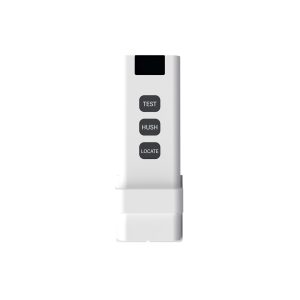
• RF Interconnection: Many portable alarms support interconnection via radio frequency (RF) signals, such as 433MHz. If just one unit detects smoke, every alarm throughout the house will sound simultaneously, ensuring that you are alerted immediately—even if you happen to be in the basement.
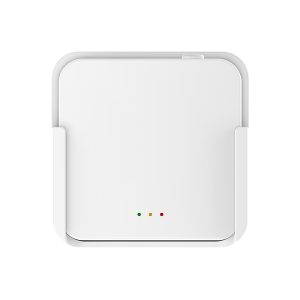
• Wi-Fi/Bluetooth Integration: Certain smart models support integration with smart home ecosystems such as Mi Home or Tuya. When a smoke alarm is triggered, a real-time pop-up alert appears on your smartphone app; furthermore, the system can be configured to trigger automated actions—such as activating a robotic arm to shut off the gas valve or switching on exhaust fans—thereby achieving truly automated home security.

What should wholesalers consider when selecting portable smoke detectors and alarms?
Wholesalers selecting portable smoke detectors and alarms should prioritize UL 217,AS3786 or EN14604 compliance, reliable sensor technology (photoelectric for smoldering, ionization for flaming, or dual-sensor), and long-lasting battery options. Key considerations include product certifications, brand reliability (e.g., Kidde, First Alert), and compliance with fire safety regulations.