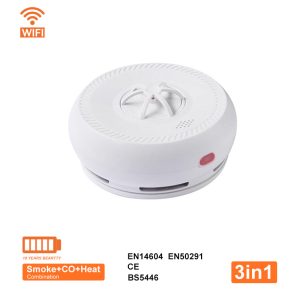
Anka Security identifies the best interconnected smoke alarms in the UK for the 2025/2026 season—devices that seamlessly combine reliable, rapid-sensing technology with wireless (RF) connectivity, precisely the key elements mandated by modern safety regulations. Anka’s curated selection of top picks includes the intelligent Google Nest Protect; the budget-friendly X-Sense Link+ Pro; the Anka AJ76 series, which offers exceptional value and ease of installation; and the robust, professional-grade Aico Ei series.

In the UK, smoke alarm regulations mandate at least one working smoke alarm on every storey used as living accommodation in rented homes, with alarms required in rooms containing fixed combustion appliances. Landlords must ensure alarms are working at the start of tenancies and replace faulty ones. Scotland requires interlinked systems, while England mandates smoke detectors on every storey.

Anka Security presents an in-depth analysis of the UK’s top interconnected smoke alarm systems:
Best All-Around Smart Alarm: Google Nest Protect (2nd Generation) — Excels in smartphone alert notifications, automatic self-testing capabilities, and voice announcements specifying the exact location of a fire.
Best Professional/Reliable System: Aico (Ei Series, e.g., Ei3016) — Widely recognized as a market leader, specializing in high-quality, long-life wired and wireless interconnected systems; frequently chosen by landlords to ensure regulatory compliance.
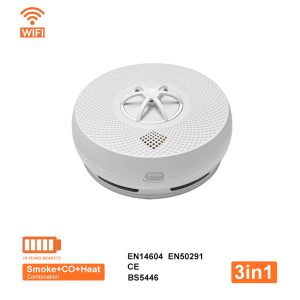
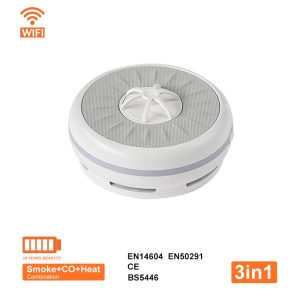
Best Value Wireless System: AJ76X Series — Offers highly cost-effective, battery-powered wireless interconnected kits that require no wiring and are simple to install.
Best Smart Features & Response Speed: FireAngel Pro Connected — Utilizes Thermoptek technology to rapidly detect fires and includes a gateway to enable smartphone app notifications.
Best Minimalist Design: Cavius CV2106 — A compact, aesthetically pleasing, and wirelessly interconnected alarm that is ideal for installation in confined spaces.

Considerations When Choosing Smoke Alarms for the UK Market:
Wireless vs. Wired: Wireless (RF) alarms are the ideal choice for retrofitting existing buildings, as they eliminate the need for rewiring between rooms; conversely, new builds typically favor wired alarms.
Compliance: Select alarms that comply with BS EN 14604 (smoke) and BS 5446-2 (heat) standards to ensure full adherence to UK safety regulations.
Sensor Type: Optical (photoelectric) sensors are ideal for detecting smoldering fires, whereas heat alarms are mandatory in kitchen environments to prevent false alarms triggered by cooking steam.

What are the common types of smoke alarms found in the UK
Photoelectric: More effective at detecting larger smoke particles; suitable for smoldering fires (e.g., burning sofas or electrical wiring).
Ionization: Generally more affordable and more sensitive to the tiny smoke particles produced by fast-burning fires (e.g., burning paper or wood).
Heat Alarms: Best suited for installation in kitchens to prevent false alarms triggered by cooking fumes.
Interlinked Alarms: If one alarm is triggered, all alarms in the system will sound simultaneously. This type of system is recommended to ensure that every resident in the home can hear the alarm.