Smoke detectors sense the presence of smoke from a fire, while heat detectors are triggered by a rise in temperature. Smoke detectors are best for most rooms to provide early warning, while heat detectors are better for places like kitchens where smoke or steam is common, so they don’t trigger false alarms.

Smoke detectors
What they do: They sense the visible smoke particles produced by a fire.
Best for: General living areas, bedrooms, and hallways where they can provide the earliest possible warning of a fire.
Types: Ionization, photoelectric, and dual-sensor models are available.

Heat detectors
What they do: They respond to an increase in temperature.
How they work: They can trigger an alarm based on a specific high temperature, or if the temperature rises too quickly over a short period (rate-of-rise).
Best for: Locations where smoke or steam is normally present, such as kitchens, garages, or workshops, to prevent false alarms from cooking fumes or steam.
Key differences
| Feature | Smoke Detector | Heat Detector |
|---|---|---|
| Trigger | Smoke | High temperature or rapid temperature rise |
| Best for | General areas to provide early warning | Areas with high levels of steam or dust |
| False alarms | Prone to false alarms in kitchens | Less likely to have false alarms in kitchens |

Combining the two
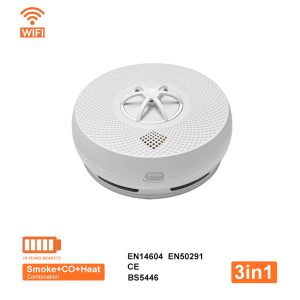
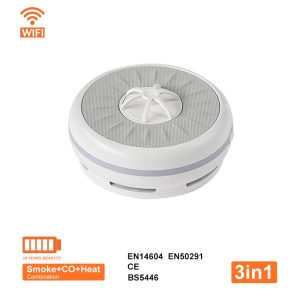
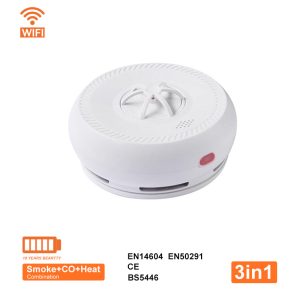
Some modern alarms combine both smoke and heat sensors to offer a more comprehensive safety device.
The Singapore Fire Code requires smoke detectors in all new and existing homes undergoing fire safety work, with at least one required, but more are recommended.