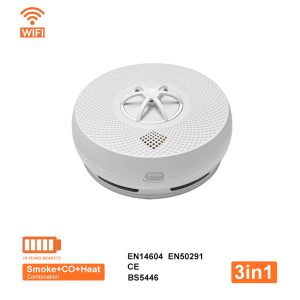
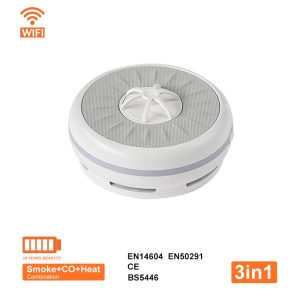
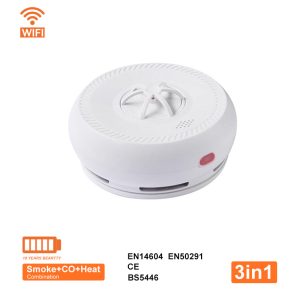
Yes, e-cigarettes can trigger smoke alarms. This is because the aerosol or vapor exhaled from e-cigarettes contains a large number of particles that can block the light beam or scatter it within the sensor chamber of the detector.

Anka Security shares the reasons why e-cigarette vapor triggers smoke detector alarms:
Alarm Type: Photoelectric smoke detectors (which use a light beam to detect particulate matter) are most easily triggered by e-cigarette vapor.
Vapor Concentration: Low-resistance e-cigarettes or devices that “chase large smoke” produce a large amount of vapor, making them more likely to trigger alarms than low-power, concealed e-cigarettes.
Ventilation: Using e-cigarettes in small, enclosed, or poorly ventilated spaces causes vapor to accumulate rapidly around the detector, significantly increasing the risk of false alarms.
To prevent e-cigarettes from accidentally triggering smoke alarms, please use a limited-airflow e-cigarette or a low-power device with less vapor production. Always use e-cigarettes in well-ventilated areas and blow the vapor away from the device (ideally out the window), or use a personal smoke filter.

Anka Security suggests you try the following effective strategies:
Maintain air circulation: Open windows on both sides of the room to allow vapor to escape quickly.
Avoid sensors: Never blow vapor directly at or near smoke detectors.
Use a personal filter: Exhale using an activated carbon smoke filter (such as Smoke Buddy) to completely filter out aerosol particles.
Reduce power: Reduce the power or wattage of your sub-ohm device to minimize smoke production.