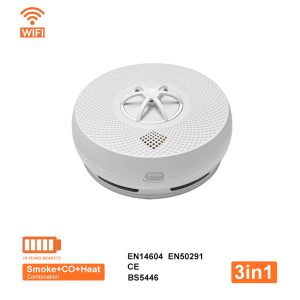
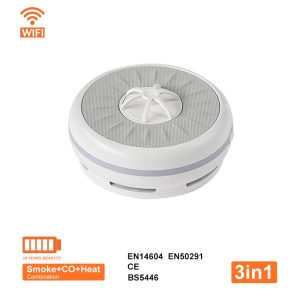
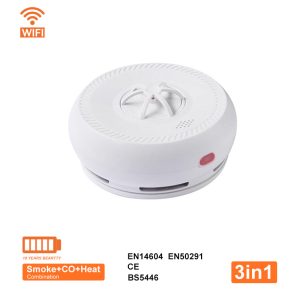
Australia has mandatory regulations for smoke detectors, and the market is mature with stable demand, especially in residential and commercial buildings. Household smoke detectors exported to Australia must meet the following mandatory certification requirements, compiled and shared below by Anka Sci-tech Co., Limited based on the latest regulations and publicly available information from 2026:

1. AS/NZS 3786:2014 Standard Compliance Certification:
This is an Australian/New Zealand joint standard that specifies key performance requirements for smoke detectors, including sensitivity, response time (≤30 seconds), false alarm rate (≤1 time/year), and environmental adaptability (-10℃~50℃, humidity ≤95% RH). Products must pass the tests required by this standard to prove compliance with safety and performance specifications.
2. SAA Certification (Safety Certification):
Smoke detectors are classified as Level 3 high-risk electrical products and are subject to mandatory SAA certification. Testing standards include AS/NZS 60335-1 (General Safety for Household Appliances) and AS/NZS 3786. Test reports must be issued by a CNAS or NATA accredited laboratory.

3. RCM Certification (Regulatory Compliance Mark):
All electrical products sold in Australia must pass RCM certification, which integrates safety (SAA) and electromagnetic compatibility (EMC) requirements. The local responsible supplier holding an Australian ABN must apply for registration in the EESS database and submit an SAA test report, EMC report, and declaration of conformity.
4. EMC Testing (Electromagnetic Compatibility Testing)
Products must comply with AS/NZS CISPR 32:2023 standards. Test items include conducted interference (150kHz–30MHz), radiated interference (30MHz–1GHz or higher), and intermittent interference (clicking).
Australian market smoke detector installation video demonstration (AJ-710 specific model)
Additional requirements (depending on product characteristics):
· If using AC power, a Type I three-pin plug conforming to AS/NZS 3112 standards is required.
· If containing a wireless module (such as Bluetooth/Wi-Fi), it must also comply with AS/NZS 4268 (Radio Communication Equipment) and the RED Directive (if also sold in the EU).
· If it is a plug-in device involving external power or long standby time, it may need to meet AS/NZS 4665.2:2022 (Energy Efficiency Level VI) and GEMS registration.

The certification process generally includes: confirming product classification and applicable standards, selecting an accredited laboratory for testing, rectifying non-conformities, having the local supplier submit a registration application, affixing the RCM mark, and retaining technical documents for future reference.