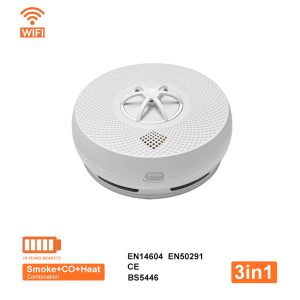
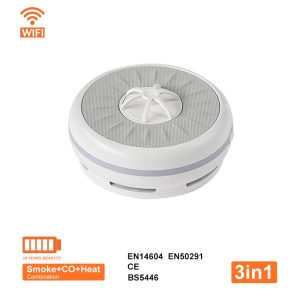
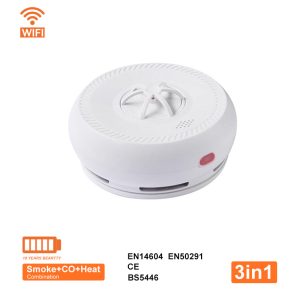
Mains-powered smoke alarms (hardwired smoke alarms) connect directly to your home’s 120V/240V electrical circuit.Compared to battery-operated models, they offer a more stable power supply and support interconnected alarming across multiple units, making them the preferred choice for modern residential and commercial buildings.

✅ Supports whole-home interconnected alarms
✅ Built-in backup battery ensures operation during power outages
What is a mains-powered smoke alarm?
Mains-powered smoke alarms are hardwired into the home’s electrical distribution system.
They rely on the main power supply for continuous operation but are also equipped with a backup battery
to ensure they continue functioning during power outages or if the main power is cut off during a fire.
Key Advantages
1. Continuous power supply—no more missed battery replacements
Battery-operated alarms often fail because users forget to replace the batteries. Mains-powered models
rely on the home’s electrical circuit, significantly reducing the risk of protection gaps caused by dead batteries.
2. Interconnected Alarms (Interconnection)
In a multi-room system, if one alarm is triggered, all interconnected units sound simultaneously.
For example, if a fire starts in the basement, an alarm in an upstairs bedroom will sound immediately.
3. Backup battery protection
Even if the main power supply is interrupted, a backup battery (9V or rechargeable lithium)
automatically takes over, ensuring 24/7 protection.
How to identify a mains-powered smoke alarm?
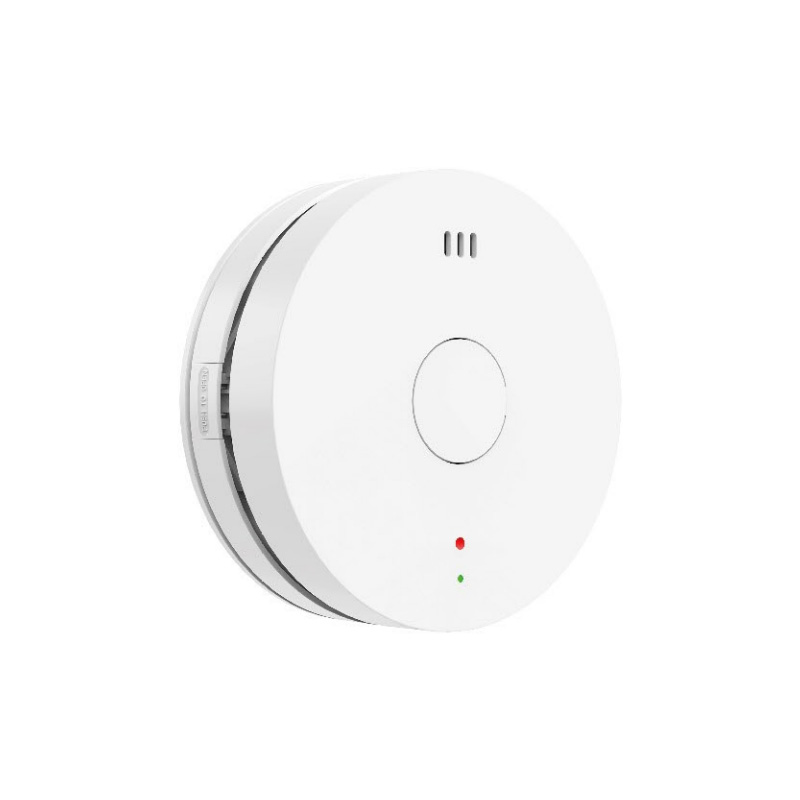
- ✅ Features a steady green LED indicator on the panel
- ✅ Continues to sound an alarm after the circuit breaker is turned off (indicating the backup battery is functioning)
- ✅ Equipped with 120V/240V wiring terminals on the back

Installation and Regulatory Requirements
As the installation involves high-voltage electrical work, mains-powered smoke alarms must be installed by a
licensed electrician to ensure compliance with local electrical codes.
| Item | Requirement |
|---|---|
| Power Supply | 120V / 240V AC |
| Backup Battery | 9V or 10-year sealed lithium battery |
| Replacement Cycle | Replace the entire unit every 10 years |
| Suitable Applications | New construction, renovation projects, rental properties |
Common Misconceptions
❌ “Hard-wired units last forever”: Incorrect. Sensors degrade over time; the entire unit must be replaced every 10 years.
❌ “No need to worry about the backup battery”: Incorrect. Backup batteries still require regular inspection and replacement.
Mains-Powered vs. Battery-Powered
Mains-powered models are suitable for permanent residences and scenarios where regulations mandate them;
battery-powered models are ideal for rental properties, temporary locations, or areas where wiring is not feasible.
Many households adopt a hybrid deployment strategy to balance regulatory compliance with flexible coverage.