Carbon monoxide is slightly less dense than air, with a relative density of approximately 0.97 (air = 1), making it roughly 3% lighter. Because its molar mass (28.01 g/mol) is very close to the average molar mass of air (~28.97 g/mol), mixes evenly with air, though it may initially rise.
Iinstall carbon monoxide (CO) detectors on every floor, especially near sleeping areas and in rooms with fuel-burning appliances (boilers, stoves, fireplaces). Place them at knee-level or up to 5 feet high, ensuring they are not within 15 feet of appliances, or near bathrooms/vents.

What is a carbon monoxide detector alarm?
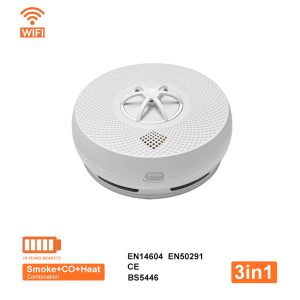
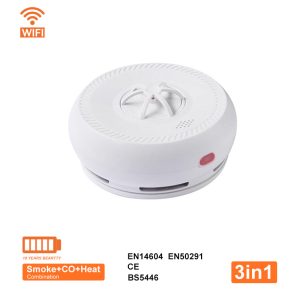
A carbon monoxide (CO) detector alarm is a vital safety device designed to detect dangerous, odorless, and invisible CO gas, sounding an alarm before levels become fatal. It protects against “silent killer” poisoning from faulty fuel-burning appliances by measuring CO concentration in the air.
Purpose: Monitors indoor air for the buildup of Carbon Monoxide, a poisonous gas produced by furnaces, stoves, fireplaces, and vehicles.
Operation: Uses electrochemical sensors to measure CO concentration in parts per million (ppm) and triggers a loud, distinct alarm if levels become unsafe.
Placement: Should be installed on every level of the home and near sleeping areas.
Alarm Signal: Typically emits 4 loud beeps, a pause, and then repeats, indicating an immediate need to evacuate to fresh air and call emergency services.
Maintenance: Requires regular testing (monthly) and battery replacement.

Key Installation Locations:
Sleeping Areas: Within 10 feet of all bedrooms, ensuring the alarm is loud enough to wake sleepers.
Near Appliances: In rooms with fuel-burning appliances (e.g., boiler, furnace, water heater, stove).
Each Floor: At least one detector on every level, including the basement.
Attached Garage: Install a detector near or in any attached garage to detect fumes from vehicles.
Installation Tips:
Height: Place on a wall about 5 feet above the floor (eye level) or near knee level.
Obstructions: Avoid placing alarms behind furniture, curtains, or near, in, or over vents, fireplaces, and bathrooms.
Distance: Keep at least 15 feet (5 meters) away from gas-burning appliances to avoid false alarms.
Maintenance: Test detectors monthly and replace them according to the manufacturer’s instructions.