

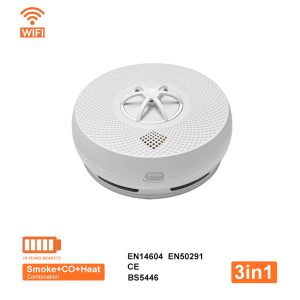
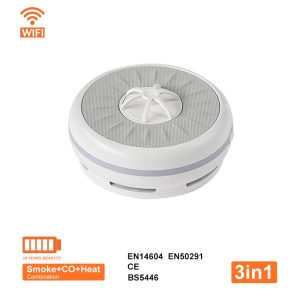
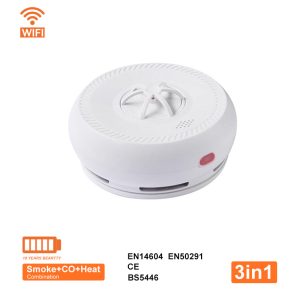
10-year battery wireless interconnected smoke alarms provide complete home protection without wiring or battery changes. This guide compares top models with sealed lithium batteries, wireless interconnection, and smart features for decade-long safety.

Why Choose 10-Year Battery Wireless Alarms?
- No battery changes: Sealed lithium batteries last the full 10-year sensor life
- Wireless interconnection: Alarms communicate without hardwiring (typically 900MHz RF)
- Easy installation: No electrician needed – mounts with screws or adhesive
- Code compliant: Meets NFPA 72 standards for interconnected alarms
- Cost effective: Eliminates annual battery replacement costs
Important Note
While called “10-year” alarms, you must replace the entire unit after 10 years (per manufacturer instructions). The sensors degrade over time, making replacement crucial for continued protection.
Top 10-Year Battery Wireless Interconnected Alarms
1. First Alert 10-Year Wireless Interconnected Smoke Alarm
- Battery: Sealed lithium (non-replaceable)
- Interconnection: Wireless RF (up to 18 units)
- Sensor: Photoelectric (best for smoldering fires)
- Smart Features: None (basic model)
- Price: $45-$55 per unit
Pros & Cons
- ✓ Trusted brand with reliable performance
- ✓ Easy DIY installation
- ✓ Loud 85dB alarm
- ✗ No smart connectivity
- ✗ Can’t replace battery (entire unit replacement)
2. Kidde Worry-Free 10-Year Sealed Battery Smoke Alarm
- Battery: Sealed lithium with power gauge
- Interconnection: Wireless (Kidde’s proprietary RF)
- Sensor: Dual photoelectric/ionization (both fire types)
- Smart Features: None (basic model)
- Price: $40-$50 per unit
Pros & Cons
- ✓ Dual sensor technology
- ✓ Battery status indicator
- ✓ Meets UL 217 standards
- ✗ Interconnects only with other Kidde units
- ✗ Slightly bulkier design
3. X-Sense 10-Year Battery Wireless Interconnected Smoke Detector
- Battery: Sealed lithium with low-battery warning
- Interconnection: Wireless RF (up to 24 units)
- Sensor: Photoelectric
- Smart Features: None (basic model)
- Price: $35-$45 per unit
Pros & Cons
- ✓ Most affordable option
- ✓ Slim, low-profile design
- ✓ Easy test/silence button
- ✗ Less brand recognition than First Alert/Kidde
- ✗ Limited warranty (5 years)
| Feature | First Alert | Kidde | X-Sense |
|---|---|---|---|
| Sensor Type | Photoelectric | Dual (Photo + Ionization) | Photoelectric |
| Interconnection Range | Up to 18 units | Up to 24 units | Up to 24 units |
| Alarm Volume | 85dB | 85dB | 85dB |
| Low Battery Alert | Yes | Yes (with gauge) | Yes |
| Price per Unit | $45-$55 | $40-$50 | $35-$45 |
Installation & Maintenance Tips
- Placement: Install on every level, inside/bedrooms, and outside sleeping areas
- Interconnection: Follow manufacturer pairing instructions (usually involves test button sequence)
- Testing: Test monthly using the test button
- Cleaning: Vacuum every 6 months to prevent dust buildup
- Replacement: Replace entire unit after 10 years (even if still working)
Safety Warning
Never paint smoke alarms or install in these locations:
- Within 10 feet of cooking appliances
- Near windows, doors, or ducts
- Bathrooms or other high-humidity areas
Frequently Asked Questions
Can I replace the battery in 10-year alarms?
No – these use sealed lithium batteries designed to last the full 10-year sensor life. When the battery dies, you must replace the entire unit (as indicated by end-of-life chirping).
Do wireless interconnected alarms need WiFi?
No – wireless interconnection uses radio frequency (RF), not WiFi. These communicate via proprietary RF signals (typically 900MHz) between same-brand units. WiFi is only needed if you want smart features like phone alerts.
How many units can interconnect?
Most systems support 12-24 interconnected units (check manufacturer specs). First Alert supports 18, Kidde and X-Sense support 24. All units must be same brand/model for wireless interconnection.








Leave A Comment