

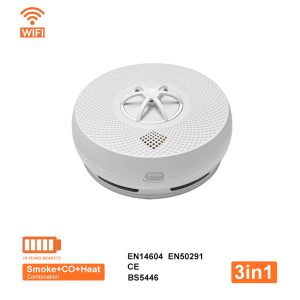
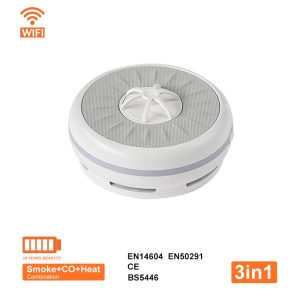
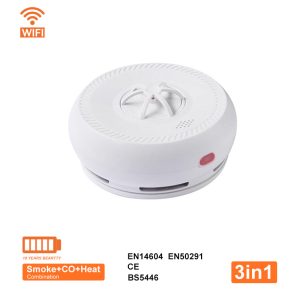
Yes, smoke detectors can be completely wireless. With the development of the Internet of Things and smart home technology, wireless smoke detectors have become a common choice. They are battery-powered and use wireless communication technologies (such as Wi-Fi, Bluetooth, Zigbee, etc.) to connect with other devices or mobile applications. Here are the details about wireless smoke detectors:
1. How Wireless Smoke Detectors Work
Power Supply Method
Use replaceable batteries (usually lithium batteries) or rechargeable batteries, without relying on power cords.
Communication Technology
- Wi-Fi: Directly connect to the home network, and receive alerts remotely through the mobile phone app (such as Nest Protect).
- Bluetooth: Pair with mobile phones, suitable for local notifications (such as Roost Smart Smoke Detector).
- Zigbee/Z – Wave: Integrate into the system through smart home hubs (such as Amazon Echo, Google Nest Hub).
Alarm Method
Send out high – decibel sound and light alarms, and push notifications to mobile phones at the same time.
2. Advantages of Wireless Smoke Detectors
- Easy to Install: No wiring is required, and it can be easily installed in any location (such as bedroom, kitchen).
- Flexibility: Suitable for renting, renovating or adding additional detectors.
- Smart Linkage: Link with other smart devices (such as automatically turning on lights or turning off gas in case of fire).
- Remote Monitoring: Receive alerts on your phone even when you are not at home.
- Aesthetics: Usually designed to be simpler with no exposed wires.
3. Potential Disadvantages
- Reliant on Batteries: Check the battery status regularly, and it may fail due to lack of power if not used for a long time.
- Signal Interference: Wireless signals may be interfered by walls or equipment, but most products have a reconnection mechanism.
- Higher Cost: More expensive than traditional wired models (about $50 – $200). Note: There was a typo in the original text where “50 – 50 – 50 – 200” was written, it has been corrected here.
- Regulatory Restrictions: Some areas require hard – wired detectors (such as apartment buildings), which need to be confirmed in advance.
4. Usage Suggestions
- Check the Battery Regularly: Even if the device has a low battery reminder, it is recommended to replace it every six months.
- Comply with Safety Standards: Choose products that are UL certified to ensure compliance with local fire regulations.
- Dual Detector Solution: Combining wireless and wired detectors to cover different areas (such as wired for public areas and wireless for bedrooms).







Leave A Comment