

Whether smoke alarms need to be interconnected depends on specific scenarios. The following text analyzes the advantages and disadvantages of interconnection and non interconnection
1. Interconnection Requirements by Scenario
1.1 Studio apartments/small units
- May not need interconnection (single alarm sufficient)
- Recommend standalone alarms with wireless interconnection capability
1.2 Multi-story homes/large flats (mandatory)
- China GB50116 code:Required for spaces over 80m²
- US NFPA72 standard:Required outside all bedrooms
- When interconnected,any detector triggers whole-house alarm
1.3 Commercial spaces (mandatory interconnection)
- Must connect to fire control system
- Requires linkage with emergency lighting and smoke exhaust
2. 4 Core Advantages of Interconnection Smoke Detector
| Advantage | Description | Test Data |
|---|---|---|
| Escape time doubled | Early warning for distant rooms | Gains 3-5 minutes on average |
| Lower false alarms | Multi-sensor cross-verification | 47% reduction (UL tests) |
| System reliability | Single failure doesn’t affect whole system | 300% redundancy increase |
| Smart linkage | Can trigger sprinklers/alarm center | Response <10 seconds |
3. Main Interconnection Technologies Compared
3.1 Wired Smoke Detector (most reliable)
- Uses 3-wire system (power+signal+ground)
- Installation requires RVVP 3×1.0mm² shielded cable
- Max distance:150m (needs repeater beyond)
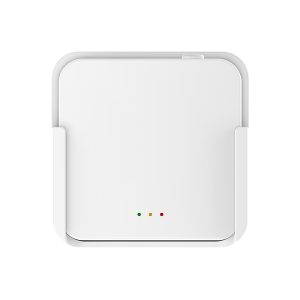
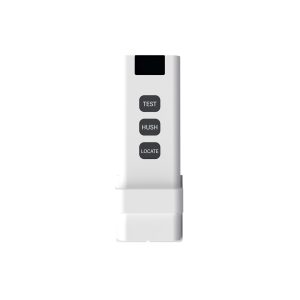
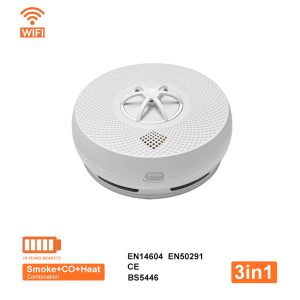
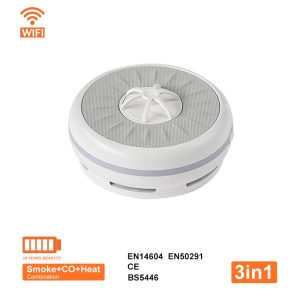
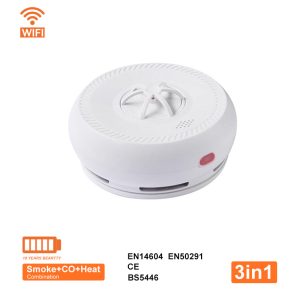
3.2 Wireless (mainstream choice)
- Protocols:Zigbee 3.0 (most stable),Wi-Fi (best compatibility)
- Range:30m indoor/100m outdoor (environment dependent)
- Encryption:Minimum AES-128 required
3.3 Hybrid networks (professional solution)
- Wired backbone + wireless endpoints
- Requires protocol conversion gateway
4. 5 Cases Where Interconnection is Mandatory
- Duplex/villa (vertical distance >3m)
- Units with corridors >15m long
- Households with elderly/children
- Smart home system users
- When required by local fire codes
5. Interconnection Smoke Detector Installation Notes
Location requirements:
- Spacing <9m
- >1m from AC vents
- >0.5m from wall corners
Power configuration:
- Main power:220V AC (±10%)
- Backup battery:≥72hr runtime
Testing standards:
- Monthly functional test
- Annual sensitivity calibration (using 0.8dB/m smoke source)
6. Frequently Asked Questions
Q:Does interconnection increase power consumption?
A:Only adds 0.5W standby power per unit – negligible
Q:Can different brands interconnect?
A:Requires protocol compatibility verification – same-brand recommended
Q:How to simply interconnect in rentals?
A:Choose Bluetooth Mesh battery models (e.g. Mi Home solution)
Recommendation: Interconnected systems mandatory for 120m²+ homes,preferably wireless IoT solutions (like Nest Protect). Commercial spaces require licensed wired system installation.







Leave A Comment