

Smoke detectors are essential safety devices designed to detect smoke and trigger an alarm, giving occupants the critical time needed to escape a fire. However, many homeowners and landlords are unsure about the lifespan of these devices and the protocols for replacing them.

This guide will discuss the parameters for replacing your smoke detector or its battery, as well as the correct maintenance practices required to keep your household safe.
1. How Long Do Smoke Detectors Last?
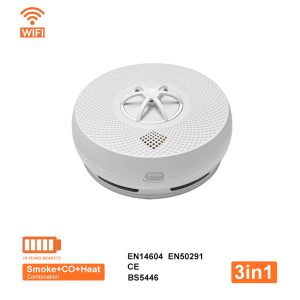
According to the Australian Standard AS3786, an ideal smoke detector—whether hard-wired or powered by a quality lithium battery—is designed to last for 10 years. After this period, the entire unit should be replaced.
During those ten years, smoke detectors are exposed to various environmental factors, including:
- Electrical corrosion
- Accumulation of dust particles
- Small insects and airborne contaminants
Important: After ten years, the sensor’s sensitivity degrades, making the detector less effective. Failure to replace an aging unit puts your household at risk of fire outbreaks, potentially leading to unnecessary property loss or, worse, fatalities.

2. What to Consider When Replacing Smoke Detectors
Check the Manufacture Date
The first step is to check the manufacture date. Remove the smoke detector from the wall or ceiling and look for the date stamped on the back.
- If the date is less than 10 years ago, return it to its position.
- If it is 10 years or older, the unit must be replaced immediately.
Replacing the Battery vs. The Unit
While high-quality lithium batteries can last up to 10 years, some standard batteries require more frequent attention.
- Lithium Battery Units: These are sealed. If the unit beeps, you usually need to replace the entire detector.
- Standard Battery Units: If you hear a sharp “chirping” sound, it indicates the battery is low and needs replacement.
How Often Should You Replace Batteries?
You should replace the battery as soon as you hear a warning chirp. As a general rule:
- Replace batteries once a year.
- Some manufacturers recommend twice a year (e.g., when switching to/from Daylight Saving Time).

3. How to Maintain Smoke Alarms
A smoke alarm only works if it is correctly installed and regularly checked. A detector with a missing or dead battery is as useless as not having one at all.
Here are maintenance recommendations based on the type of smoke alarm you have:
9-Volt Battery Powered Alarms
- Test: Press the test button on the interface once a month.
- Replace Battery: Every 12 months.
- Replace Unit: Every 10 years.
Lithium Battery Alarms (Sealed)
- Test: Press the test button once a month.
- Replace Battery: The battery is in-built and cannot (and should not) be replaced. The entire unit is disposed of after its lifespan ends.
- Replace Unit: According to the manufacturer’s recommendation (usually 10 years).
Hard-Wired Alarms (Mains Powered)
- Test: Monthly.
- Replace Back-up Battery: The 9V back-up battery should be replaced once a year to ensure functionality during power outages.
- Replace Unit: Every 10 years.







Leave A Comment