

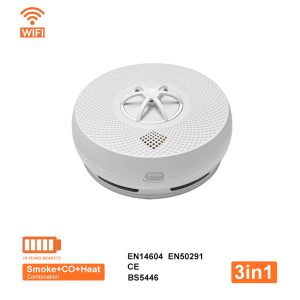
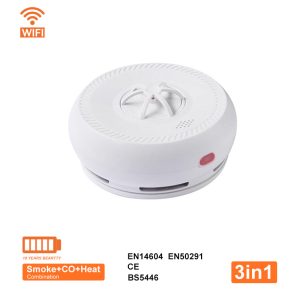
The advantages of wireless smoke detectors in terms of reliability, including flexible installation and layout, intelligent linkage and remote monitoring, maintenance and upgrading, and disaster prevention and backup, comprehensively demonstrate that although wireless smoke detectors have limitations, they have overall high reliability.
1. Advantages of Flexible Installation and Layout
Unrestricted Installation Location
Wireless smoke detectors do not require wiring and can be flexibly installed in various places. Whether it is an old building that is difficult to wire or a modern house with a complex structure, it is easy to find a suitable installation location. For example, in ancient buildings, in order to protect the integrity of cultural relics and building structures, it is impossible to drill holes and wire at will. Wireless smoke detectors can play their advantages and be installed in various key locations to ensure comprehensive monitoring of smoke conditions.
Optimized Layout
The location and density of detectors can be freely adjusted according to the smoke diffusion characteristics and fire risk level of different spaces. In different functional areas such as kitchens, bedrooms, and living rooms, they can be accurately arranged to improve the comprehensiveness and accuracy of fire warnings.
2. Advantages of Intelligent Linkage and Remote Monitoring
Intelligent Linkage Responds Promptly
Wireless smoke detectors can be integrated with smart home systems to achieve intelligent linkage. When smoke is detected, a series of preset safety measures can be automatically triggered, such as closing the gas valve, turning on the exhaust fan, and starting the emergency lighting. This rapid response mechanism can effectively reduce the losses caused by the fire and ensure the safety of personnel and property.
Remote Monitoring for Real – Time Peace of Mind
Users can remotely monitor the status of smoke detectors anytime and anywhere through mobile phone applications. Even if you are away from home, you can receive alarm information in time and understand the smoke situation at home or in the workplace. This remote monitoring function allows users to stay alert to potential fire risks even when they are not on site, and strive for more response time.
3. Maintenance and Upgrade Advantages
Convenient Maintenance
Wireless communication technology makes the maintenance of detectors more convenient. When the detector needs to be debugged, calibrated or the battery needs to be replaced, there is no need to perform complex wiring operations like traditional wired detectors. It only needs to be remotely operated or simply replaced through the corresponding software or equipment, which greatly reduces the maintenance cost and time.
Software Upgrade to Improve Performance
Manufacturers can perform software upgrades on detectors through wireless networks to continuously optimize their performance and functions. For example, update the smoke detection algorithm to improve the ability to identify different types of smoke; add new safety features, such as compatibility with other safety equipment. This allows the detector to continue to improve its reliability as technology continues to develop.
4. Disaster – Resistant Backup Advantages
Strong Independence
In some cases, when natural disasters such as earthquakes and floods cause power outages or communication lines are damaged, traditional wired smoke detectors may become ineffective. Wireless smoke detectors are powered by batteries and can continue to work as long as the batteries have power, providing personnel with reliable fire warnings and increasing safety in disaster situations.
Backup Communication Mechanism
Some advanced wireless smoke detectors have multiple communication methods, such as supporting Wi-Fi, Bluetooth, and Zigbee at the same time. When one communication method is interfered with or interrupted, it can automatically switch to other communication methods to ensure that the alarm information can be sent out in time, improving the reliability and stability of the system.







Leave A Comment