

Hardwired interconnected smoke alarms of different brands and models may have differences in specific installation steps and wiring methods. It is important to carefully read the product manual before installation.
Preparation Before Installation
- Confirm specifications: Determine the required number and type of smoke alarms based on the site area,layout,and building specifications.
- Equipment inspection: Open the box and check if the smoke alarm and accessories are complete,inspect for any damage to the appearance,and ensure proper functionality.
- Prepare tools: Prepare necessary tools and materials such as drills,screwdrivers,wrenches,ladders,measuring pens,insulation tape,etc.
- Power off: To ensure safety,be sure to turn off the power supply of the relevant circuits before installation.
Determine Installation Location
- Ceiling installation: Priority should be given to ceiling installation. If it is a flat ceiling,it should be installed in the center of the room;if there are beams on the ceiling,one should be installed in the area between each beam or on both sides of the beam.
- Wall installation: If it is not possible to install on the ceiling,wall installation can be chosen,with a height of about 2.0-2.5 meters from the ground and a distance of not less than 0.5 meters from the wall corner.
- Avoid obstacles: Avoid installing near ventilation openings,ventilation fans,air conditioning vents,and above equipment that produces smoke or steam such as stoves and ovens.
Connecting Lines
- Identification of wiring: Typically,hardwired smoke alarms have power cords (usually red and black) and interconnects (usually white or yellow). The red wire is connected to the live wire,the black wire is connected to the neutral wire,and the white or yellow wire is used to connect various smoke alarms.
- Wiring operation: Open the wiring terminal cover of the smoke alarm and connect the power cord and interconnecting wire to the corresponding terminals according to the markings. Generally,screw crimping is used to ensure a secure connection. After the connection is completed,wrap the wiring with insulating tape to prevent short circuits.
Install Smoke Alarm
- Fixed base: If the ceiling or wall is a concrete structure,it is necessary to drill holes with an electric drill,insert expansion bolts,and fix the smoke alarm base in the corresponding position;if it is a wooden structure,the base can be directly fixed with screws using a screwdriver.
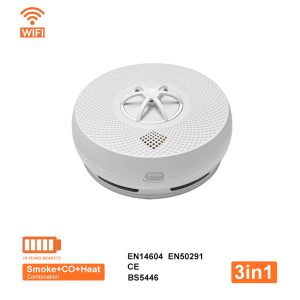
- Install detector: Align the smoke alarm with the base,gently press until it clicks into place,ensuring a secure installation.
Testing and Debugging
- Restore power supply: After the line connection and detector installation are completed,carefully check to ensure there are no errors before restoring power supply to the circuit.
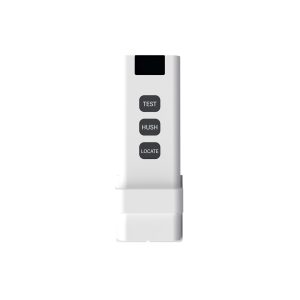
- Function test: Press the test button on the smoke alarm to check if it can emit an alarm sound normally,and observe if other interconnected smoke alarms also sound at the same time.
- Adjust sensitivity: Some smoke alarms can adjust sensitivity according to the actual usage environment and requirements,and can be adjusted according to the instructions.







Leave A Comment