

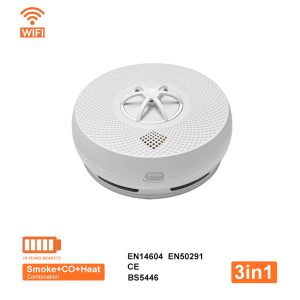
To determine if a smoke alarm is hardwired, look for a green LED light, which indicates it is receiving power from the building’s electrical system. You can also check the wires connected to the alarm and, if there are, remove the batteries; if it still works, it is hardwired with a backup battery. If you’re not sure, try testing the alarm by creating smoke; if it sounds without a battery, it is most likely hardwired.
Here are more detailed instructions from anka security for you:

1. Check the Green LED Light:
Hardwired smoke alarms are usually connected to the building’s electrical system and have a green LED light indicating that they are receiving power.
A flashing red light indicates normal operation, while a solid green light indicates that it is hardwired.
2. Check the wiring:
Hardwired smoke alarms will have wires connected to them.
Look for wires coming out of the back of the alarm or from the ceiling where the alarm is mounted.
If you see wiring, this strongly indicates that the alarm is hardwired.
3. Test with and without batteries:
Remove the batteries from the smoke alarm.
If the alarm still works after removing the batteries, it is most likely hardwired with a backup battery.
If the alarm stops working after the batteries are removed, it is a battery-powered device.
4. Test with Smoke:
Toast or create smoke near the alarm to test if it activates.
If the alarm activates without a battery, it is most likely hardwired.
5. Check the Main Panel (if accessible):
If you have access to your electrical panel, you may see a dedicated circuit for the smoke alarm.
If there is a dedicated circuit, the alarm is hardwired.
6. Interconnected Alarms:
If you have multiple smoke alarms and one goes off, they should all go off.
Hardwired smoke alarms are usually interconnected, meaning they can communicate with each other.







Leave A Comment