

Smoke detector alarms are a non-negotiable safety feature for all houses and buildings. They are essentially recommended for all living places, especially areas exposed to fire risks like kitchens or high humidity areas like washrooms. When it comes to choosing the right device, there are two main types: battery-operated smoke detectors and hardwired smoke alarms. Both have their distinct pros and cons.

If you are confused between “Hardwired vs. Battery-powered smoke alarms—which is for you?” you need to go through this article. It will help you make a better, informed decision for your family’s safety.
Battery-Operated Smoke Detectors: Freedom from Wires
Battery-powered smoke alarms are the most common choice for homeowners due to their portability and ease of installation. Here is a breakdown of the two main sub-types:
1. 9-Volt Battery Smoke Alarms
Cordless technologies have brought a revolution, allowing you to carry such devices anywhere without worrying about power outlets. However, the downside of these alarms is that since they run solely on batteries, you need to keep a strict eye on when they run out of power. If the battery dies, so does your protection.
So, if you want to have your smoke alarm up and running for the long term without frequent maintenance, this type may not be for you. Another thing to keep in mind is your local law; some local legislations do not allow them anymore in certain new constructions. So, do your homework before you proceed!
2. 10-Year Lithium-Ion Battery Smoke Alarms
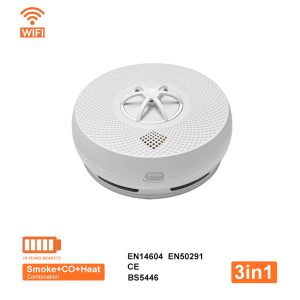
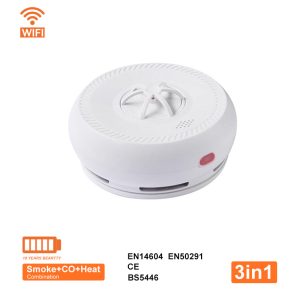
A significant upgrade from the standard 9-volt version, these 10-year battery smoke detectors can work for a decade long with (theoretically) no need to change the batteries. They come with remarkable features: no wiring, no reminders for annual replacement, and above all, comfortable and cheap installation.
However, what prevents it from being a complete package is that it unfortunately relies on a single supply source. In contrast to hardwired types that offer the convenience of a dual power supply (mains + battery), this runs on a single power source. Thus, do a thorough study before you buy these relatively expensive alarms.

Hardwired Variety of Smoke Alarms: The Robust Guardian
Hardwired smoke detectors are directly connected to your home’s electrical system, offering a more permanent solution for fire safety.
1. Standard Hardwired Smoke Alarms
Not only does their name sound rigid and robust, but they are also strongly powered with 240 volts of the main supply. Besides, they also have a 9-volt battery to make them work smoothly and continuously as a backup battery source in case of a blackout.
They feature very advanced and modernized models, such as photoelectric and ionization sensors. These are the ones that are widely accepted and often mandated by legislation for new installations. So, you won’t face any change of plan if you pursue them as the primary smoke detector during your construction time.
Yes, you are thinking on the right track. Since they have to be wired, it is best to install them while the construction of your home or building is underway to avoid cables roaming about like vines! Nevertheless, you can retrofit them later at any time, though it might be more intrusive.
2. Hardwired Plus Rechargeable Battery
This is a handsome package. As it is said, everything has a cost, so yes, it has a price that is on the higher side compared to its counterparts. But this type has combined the strength of a 240-volt main supply with the backup of a rechargeable lithium battery.
Thus, it will continue to serve your purpose for a minimum of ten good years. Longevity, reliability, and durability are good enough to convince you to spend extra bucks on them. Invest in them, as Kenner Electrics strongly recommends them.
The Differences: Battery-Operated vs. Hardwired Smoke Detectors
Though the distinctions may have become evident, let us dive deeper into the specific differences to help you decide.
1. Easy Installation
It requires the services of a skilled electrician if you have opted for the hardwired alarms, as they depend upon the main supply. A good network of cables is required for connecting the mains with the device at its installation site. Well, no such problem exists with the battery-dependent devices. A beginner or a person with no prior knowledge can easily install it using the manual.
2. Reliability
Hardwired is, no doubt, the more reliable option as they utilize a dual-source power system with a backup, so no worries during a power outage. On the contrary, you cannot depend on the battery ones for longer than their due date of replacement. Once the battery weakens, the device becomes unreliable.
3. Need for Maintenance
When you want to look for a fault or perform maintenance on hardwired smoke alarms, you ought to have a skilled wireman to deal with putting off the main supply and checking the connector cables. However, in the case of battery-dependent smoke alarms, you have to change its batteries manually. In case you forget and its time is due, it will start showing tantrums in the form of false alarms and malfunctioning. Additionally, you have to keep the unit dust and cobweb free for a better sensor system.
4. Ease of Use & Connection (Interconnectivity)
Imagine a cable network where devices are interconnected. Hardwired alarms at different locations in the building are often interconnected, so they may start ringing in case of smoke at multiple sites simultaneously—a great safety feature. However, if there is a fault in the main power supply, they may all become dormant.
Whereas battery-operated units are individual entities, so a problem or battery expiry in one won’t stop the others from sniffing out danger!
Which is Best for You?
To make things easier for you to decide where to spend your money:
- Hardwired Smoke Detectors: Connected to the main supply with a lithium backup. They can be wired to other devices in the same building for synchronized safety.
- Battery-Powered Smoke Alarms: A choice you won’t regret if you are looking for a cheap option and easy installation. You can prefer lithium-based alarms over the ordinary ones, though they need replacement eventually.
Which is Better? The Final Verdict
At the end of the day, you should go with your gut feeling, not just what others suggest. The one that tailors to your specific needs should be preferred over others.
- So, if you want a cheap, easy-to-install, individually monitored device, close your eyes and go for battery-operated.
- But, if you are building something new, and an interconnected supply doesn’t bother you (or is even desired), then you should definitely spend on hardwired smoke detectors.







Leave A Comment