

Modern smart homes increasingly rely on smoke detectors and heat detectors to protect families from dangerous fire outbreaks. But which device offers better protection? This guide explains how each detector works, their pros and cons, and how to choose the right one for your home.

How Smoke Detectors Work
Smoke detectors use two main technologies:
- Ionization Sensor: Uses a small electric current between two plates. When smoke interrupts this current, the alarm sounds.
- Photoelectric Sensor: Uses a light beam inside the device. If smoke scatters the beam, the alarm triggers.
Many modern devices combine both technologies for maximum safety.
Pros and Cons of Smoke Detectors
Advantages
- Detects smoke early—often before heat becomes extreme.
- Photoelectric sensors respond well to slow, smoldering fires.
- Ionization sensors react quickly to fast-flaming fires.
Disadvantages
- Can trigger false alarms in dusty or humid environments.
- Requires regular battery maintenance.

How Heat Detectors Work
Heat detectors rely on either thermocouple technology or electro-pneumatic technology.
They activate only when surrounding temperatures rise significantly. Some models are mechanical and do not require power.
Pros and Cons of Heat Detectors
Advantages
- Highly accurate with fewer false alarms.
- Ideal for dusty, dirty, or high-humidity areas.
- Often used to trigger automatic sprinkler systems.
Disadvantages
- Cannot detect smoke or small temperature changes.
- Reacts slower than smoke detectors in early fire stages.
Smoke Detector vs Heat Detector: Key Differences
| Feature | Smoke Detector | Heat Detector |
|---|---|---|
| Detection Type | Smoke particles | Temperature increase |
| Technology | Ionization & Photoelectric | Thermocouple & Electro-pneumatic |
| False Alarm Risk | Higher | Lower |
| Best Use | Living areas, bedrooms | Garages, kitchens, dusty spaces |

Which One Should You Install?
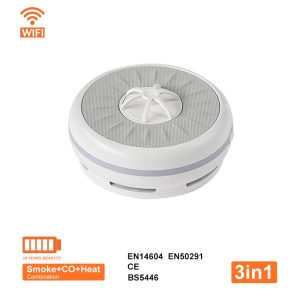
For complete home safety, experts recommend using both smoke and heat detectors.
Smoke detectors provide early warnings, while heat detectors offer reliable protection in challenging environments.
Together, they help you act faster and reduce fire-related risks.
Whether you choose a smoke detector, a heat detector, or both, make sure your devices meet safety standards
and are regularly tested to keep your home and family safe.










Leave A Comment