

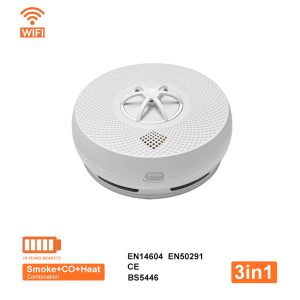
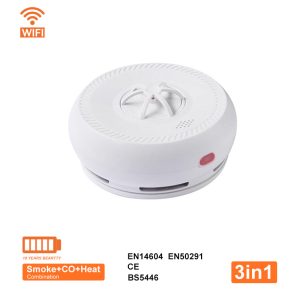
A smoke and carbon monoxide detector is typically a white, disc-shaped device about 5 inches in diameter that contains a digital display and a test button. It will have an LED light for normal function and a different LED or audio signal for each type of hazard, distinguishing it from standard smoke or carbon monoxide alarms that only detect one hazard.

Appearance of a Smoke and Carbon Monoxide Detector
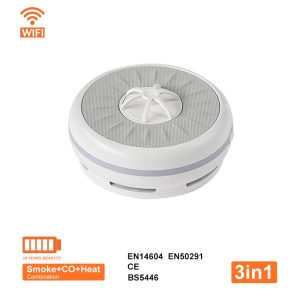
Shape and Color: Most commonly, it is a round, disc-shaped device similar to a typical smoke detector, usually white.
Digital Display: Many models include a digital liquid crystal display (LCD) that shows the carbon monoxide level in the home.
Button: You will find a central button, usually labeled “Test/Reset,” that is used to test the device’s functionality and reset it.

Indicators and Alarms on Smoke and Carbon Monoxide Detectors
LED Light: A light-emitting diode (LED) indicates normal function of the device and can display power or battery status.
Different Alarm Signals: Some units have separate LED patterns or strobe patterns for smoke and carbon monoxide alarms, helping you immediately identify the type of hazard.
Different beep patterns: According to wikiHow, the device will emit different beep patterns for smoke and carbon monoxide detection, such as a unique beep sequence for smoke and a separate, potentially longer beep for carbon monoxide.

Key Features of Smoke and Carbon Monoxide Detectors
Dual Function: It combines a photoelectric smoke sensor with an electrochemical carbon monoxide sensor, making it a combination unit.
Power Supply: The detector is either hardwired into the electrical system or battery-powered, often with a long-lasting or sealed backup battery to provide continuous coverage even during a power outage.
Interconnectivity: Some units can be wirelessly or hardwired to other detectors in the house, meaning all units will sound the alarm if smoke or carbon monoxide is detected.







Leave A Comment