

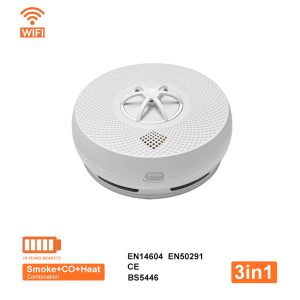
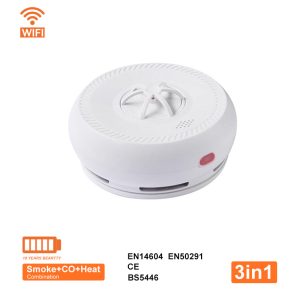
A standalone smoke detector is a self-contained device that detects smoke and alerts you to a potential fire without being connected to any other alarm system. Here are some key points about standalone smoke detectors:
Independence:
It operates independently, meaning it is not hardwired or interconnected with other detectors. This makes it a good choice for smaller spaces or to enhance an existing security system.
Power supply:
Standalone detectors are usually powered by batteries (sometimes AC with battery backup), ensuring they continue to work even if the main power fails.
Simplicity:
Since each unit works independently, installation and maintenance can be simpler. If a unit detects smoke, it sounds its own alarm to alert you to check that specific area.
Purpose:
These devices are ideal for areas where interconnection is not possible or necessary. They are often used for supplemental protection in apartments, small homes, or large buildings.
Standalone smoke detectors provide localized alerts without the need for complex interconnection systems, providing effective fire safety for many environments.
What is the European Standard EN 14604?
European Standard EN 14604 is the mandatory benchmark for smoke alarms used in residential and similar environments. It specifies requirements, test methods, performance criteria and manufacturer instructions for stand-alone smoke alarms that detect smoke by scattered light, transmitted light or ionization.
Performance requirements: A certain level of sensitivity is required to ensure that the alarm reacts immediately when a hazard is detected.
Test methods: Specific test procedures are required to verify that the smoke alarm works properly in a variety of environments.
Design and marking: The device needs to be clearly marked with battery type, replacement recommendations and manufacturing data.
Application: It is mainly suitable for use in domestic applications, but it is also suitable for various smaller spaces such as cars, hotels, caravans, etc.
Compliance with EN 14604 is essential to obtain the necessary CE certification, which proves that the smoke alarm meets the high safety and performance standards required by the European market.(WIKIPEDIA)

Can a smoke alarm be freestanding?
Smoke alarms are most effective when mounted on the ceiling or high on a wall because smoke naturally rises. For a permanent installation, this placement ensures that smoke is detected as early as possible.
That said, there are portable, freestanding models designed for temporary setups or mobile applications . These units are built to be moved around and used where a fixed installation isn’t practical. However, if you choose a freestanding smoke alarm for a permanent residence, you must be aware that it might not pick up smoke as quickly as one that’s properly mounted, and it may not meet local fire safety codes.
Always follow the manufacturer’s installation guidelines and check local regulations to ensure you’re getting the best possible protection.







Leave A Comment