

We have a recommended service life of 10 years smoke detectors. While some models may exceed this time range, it’s important to note that battery life may vary. Even if your detector appears to be working properly, it should be replaced immediately if it is damaged or malfunctions.
Several factors can reduce the service life of smoke alarms, including exposure to dust and humidity and poor maintenance. Regular testing, cleaning, and maintenance can help keep the detector working and even extend its service life.
In addition to regular maintenance, testing and replacing batteries is essential. If your smoke sensor is hardwired, we recommend seeking the help of a licensed electrician.
In general, it is important to prioritize their maintenance, as it is a vital safety measure in the event of a fire.
Do smoke alarms only detect smoke?
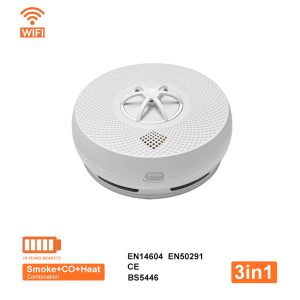
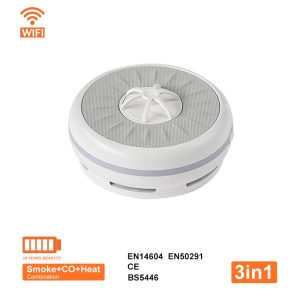
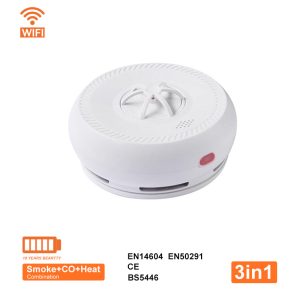
Most smoke alarms are designed to detect smoke, and we also have certain models that have more features that enable them to recognize additional fire-related signals. Some smoke alarms are complemented by sensors such as carbon monoxide (CO) detectors and heat sensors, which enhance their ability to detect smoke and various fires.
Alarms fitted with a combination of carbon monoxide and smoke can alert occupants to safe levels of carbon monoxide gas when the concentration is too high and poses a significant health risk if inhaled. Thermal sensors monitor temperature fluctuations and are particularly useful in environments where traditional smoke detectors, such as kitchens or workshops, are less effective.
Smoke alarm detector technology introduces a new set of features such as intelligent connectivity to mobile devices, remote monitoring and control via the TUYA app, voice alarms for instant notification, and wireless interconnection between multiple alarms in the house for rapid detection and response in the event of a fire emergency.
Why is my smoke detector making a ringing noise?
why is my smoke alarm beeping
If the smoke detector rings, it may indicate that the battery is low, faulty, or there is a problem with the sensor. Here are a few potential causes of smoke detectors going off:
1 Low battery power: A chirping or beeping sound usually means that the battery is dead and needs to be replaced. Many models emit a periodic beep to remind people to replace the battery.
2. Faults: Internal faults may cause unexpected beeps or chirps. These failures can be caused by manufacturing defects, corrosion, or other forms of damage.
3. Sensor problems: If the sensor in the smoke alarm accumulates dirt or dust, it may mistakenly detect smoke and trigger a ringing sound.
It is crucial to resolve any issues with the smoke sensor promptly, as its main function is to alert you to potential fire hazards. If you are not sure why your smoke detector is ringing, please refer to the user manual or ask us for help.
Why do smoke alarms go off when there is no smoke?
Smoke alarms may go off when there is no smoke for several reasons:
1. Cooking: It can be triggered by smoke or fumes from cooking, especially when cooking at high temperatures or with oil and other greasy substances.
2. Steam: It Can be triggered by steam generated by a hot shower or bathtub, especially if the steam is close to the alarm.
3. Dust or debris: This may be triggered by dust, dirt, or debris that accumulates inside the sensor or the smoke alarm.
4. Failure: Failure may occur due to aging, physical damage, or other factors, resulting in false alarms or no alarm in the actual occurrence of fire.
It is important to test and maintain smoke alarms regularly to reduce false alarms and ensure they are working properly. This includes regularly cleaning and vacuuming the sensor to remove any accumulated debris, as well as replacing the battery and the smoke alarm itself if necessary. If your smoke alarm continues to go off without any obvious reason, it’s best to contact us for help.







Leave A Comment