

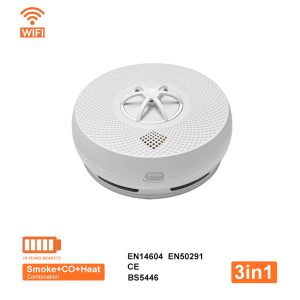
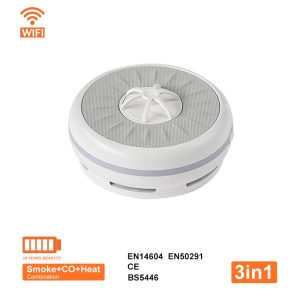
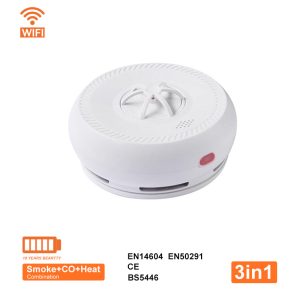
With the increasing popularity of smart homes,many people wonder:Will Wi-Fi affect the operation of smoke alarms? Technically,the likelihood of interference between the two is extremely low.

Wi-Fi Frequency Bands:Designed for Data Transmission
The wireless access points (WAPs) we use daily,also known as Wi-Fi routers,typically operate in these frequency bands. These bands are specifically designed for high-speed data transmission,meeting our needs for smooth internet access and HD video streaming.
Unregulated devices like smoke detectors and alarms typically operate in these frequency bands. These two bands are significantly different from those used by Wi-Fi,like two parallel lines that never intersect.
No Signal Intersection:Different Frequencies,Different Paths
Because they operate on completely different frequencies,their transmitted and received signals never intersect. Wi-Fi signals “travel” in the 2.4GHz or 5GHz bands,while smoke alarms “maintain their position” in the 433MHz or 868MHz bands,each performing their respective tasks without interfering with the other.
Potential Issues and Quality Considerations
Of course,this doesn’t mean there won’t be problems in every situation. Potential issues include:
- Smoke alarm quality issues or flaws in circuit design
- False alarms or malfunction even without Wi-Fi interference
- Non-compliance with relevant product standards
Conclusion:Harmonious Coexistence is Possible
Normally,as long as the product meets relevant standards,Wi-Fi and smoke alarms can coexist harmoniously,providing convenience and safety for our lives. So,don’t worry about Wi-Fi affecting your smoke alarm;enjoy the comfort brought by technology.







Leave A Comment