

No, WiFi is not required for basic alarm interconnection. Most interlinked smoke detectors use either hardwired connections or wireless radio frequency (RF) signals to communicate. However, WiFi enables additional smart features like remote alerts.
Many homeowners wonder if WiFi is required for interconnected smoke alarms to communicate. The answer depends on your alarm system type – here’s a detailed breakdown of how smoke detectors interconnect with and without WiFi.

3 Ways Smoke Alarms Interconnect
1. Hardwired Interconnection
The traditional method where alarms are physically connected through household wiring.
- How it works: Uses a dedicated third wire between units
- No WiFi needed: Works independently of home networks
- Reliability: Most dependable connection method
Pros: Always works (even during internet outages), no signal interference
Cons: Requires professional installation, difficult to retrofit
2. Wireless RF Interconnection
Battery-powered alarms that communicate via radio frequency signals.
- How it works: Uses proprietary wireless protocols (not WiFi)
- No WiFi needed: Operates on different frequencies (typically 900MHz)
- Range: Usually 50-100 feet between units
Pros: Easy installation, works in homes without wiring
Cons: May experience interference, requires same-brand units
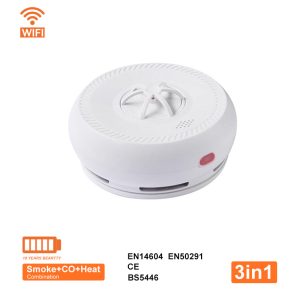
3. WiFi-Based Interconnection
Smart alarms that use home WiFi networks for advanced features.
- How it works: Connects via your home router
- WiFi required: Needs stable internet connection
- Bonus features: Remote alerts, smart home integration
Pros: Smartphone notifications, voice assistant compatibility
Cons: Dependent on WiFi stability, higher cost
| Connection Type | Requires WiFi? | Installation | Best For |
|---|---|---|---|
| Hardwired | No | Professional | New construction |
| Wireless RF | No | DIY | Existing homes |
| WiFi | Yes | DIY | Smart homes |
Key Considerations When Choosing
- Home wiring: Existing hardwired systems should stay hardwired
- Internet reliability: WiFi models need stable connections
- Compatibility: Wireless RF only works with same-brand units
- Power source: Hardwired units often have battery backup
Our Recommendation
For basic alarm interconnection, choose either hardwired or wireless RF systems (no WiFi needed). Add WiFi-enabled alarms only if you want smartphone alerts and smart home integration. Many homeowners install a combination – hardwired/RF-interconnected units for core protection with one WiFi-connected unit for remote notifications.
Frequently Asked Questions
Can I mix interconnection methods?
Generally no – hardwired, wireless RF, and WiFi systems typically can’t interconnect with each other. Some advanced systems like Nest Protect can interconnect via WiFi while also supporting traditional wired interconnection.
Do interconnected alarms need to be the same brand?
For wireless RF interconnection: Yes, same brand (and often same model) required. For hardwired: Sometimes – some manufacturers use proprietary signaling. WiFi models can often work across brands through smart home platforms.
Will interconnected alarms work during power outages?
Hardwired units with battery backup and wireless RF units will continue working. WiFi-connected alarms will only provide local alerts if your router loses power, unless they also have RF interconnection.







Leave A Comment