

Every year, house fires and carbon monoxide (CO) poisoning claim thousands of lives worldwide. The best way to protect your family? Installing smoke and carbon monoxide alarms. But what exactly are these devices, and how do they work? In this guide, we’ll explain:
- The difference between smoke detectors and CO alarms
- Why both are crucial for home safety
- How they save lives
- Best practices for installation and maintenance

What Is a Smoke Alarm?
A smoke detector is a life-saving device that senses smoke and triggers a loud alarm when a fire breaks out—especially critical at night when people are asleep.
How It Works:
- Uses photoelectric or ionization sensors to detect smoke particles
- Emits a piercing alarm (85+ decibels) to wake sleeping occupants
- Provides early warning, allowing escape before flames spread
Types of Smoke Alarms:
- Photoelectric – Best for smoldering fires (e.g., electrical fires, overheated wiring)
- Ionization – Faster at detecting flaming fires (e.g., grease fires)
- Dual-Sensor – Combines both technologies for maximum protection
What Is a Carbon Monoxide (CO) Alarm?
Carbon monoxide is a silent killer—an odorless, colorless gas produced by burning fuels (gas stoves, furnaces, cars). A CO detector alerts you when dangerous levels are present.
Why You Need One:
- CO poisoning symptoms (headaches, dizziness, nausea) mimic flu, making it hard to detect
- Just 400 ppm (parts per million) can be fatal within hours
- Prevents CO buildup from faulty heaters, blocked vents, or running cars in garages
How CO Alarms Work:
- Electrochemical sensors detect CO levels
- Trigger alarms at 30-70 ppm (low levels) or 150+ ppm (immediate danger)
- Some models display real-time CO levels
Smoke Alarm vs. Carbon Monoxide Alarm: Key Differences
| Feature | Smoke Alarm | CO Alarm |
|---|---|---|
| Detects | Smoke from fires | Carbon monoxide gas |
| Danger Type | Flames & smoke | Invisible, odorless poisoning |
| Sensor Type | Photoelectric/Ionization | Electrochemical |
| Alarm Sound | Loud beeping | Distinct pattern (e.g., 4 beeps) |
| Placement | Ceilings, hallways | Bedrooms, near fuel sources |
Do You Need Both? Absolutely!
- Fires and CO leaks are different threats—each requires a dedicated detector.
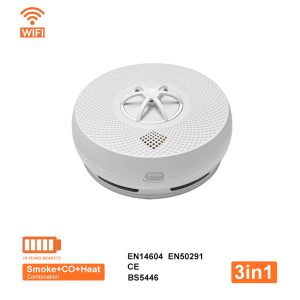
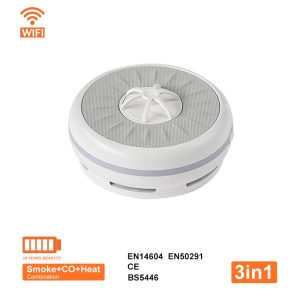
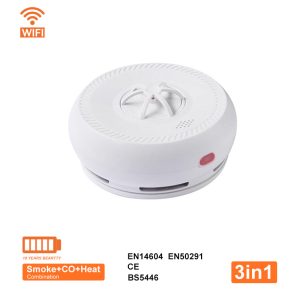
- Combination alarms (smoke + CO) exist but may have shorter lifespans.
- Legal Requirement: Many states/countries mandate both in residential homes.
Installation & Maintenance Tips
- ✅ Install smoke alarms on every floor, inside bedrooms, and hallways.
- ✅ Place CO detectors near sleeping areas and fuel-burning appliances.
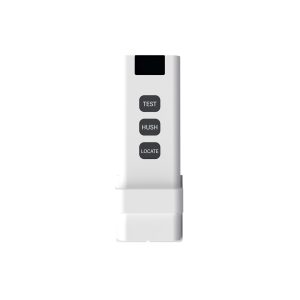
- ✅ Test monthly – Press the test button to ensure functionality.
- ✅ Replace batteries annually (or use 10-year sealed battery models).
- ✅ Replace entire unit every 7-10 years (sensors degrade over time).
Conclusion: Don’t Risk Your Family’s Safety
Smoke and carbon monoxide alarms are non-negotiable for home protection. They provide early warnings, giving you precious seconds to escape fires or ventilate CO gas.
🛒 Ready to upgrade? Check our guide on the best smoke and CO alarms for 2024!
FAQ Section
Q: Where should I place a CO detector?
A: Near bedrooms and fuel-burning appliances, but at least 15 feet from cooking areas.
Q: How often should I replace smoke alarms?
A: Every 10 years (check manufacturer guidelines).
Q: Can one alarm detect both smoke and CO?
A: Yes, combo alarms exist, but separate units often last longer.







Leave A Comment