

Fire safety regulations in Europe vary significantly from one country to another. While the European Union does not enforce a single, unified law for installation, most member states have strict national requirements. For manufacturers and consumers alike, understanding both local laws and the overarching technical standards—specifically EN 14604—is critical for compliance and safety.

The EU Standard: What is EN 14604?
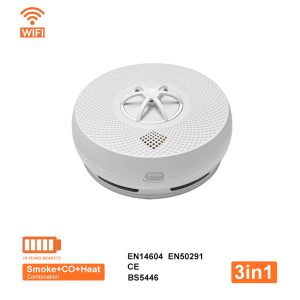
To be sold in the European Economic Area, smoke detectors must bear the CE mark and comply with EN 14604. This is the primary European standard for standalone residential smoke alarms.
Key Performance Requirements of EN 14604
- Alarm Sound: Must emit a minimum sound level of 85 dB(A) at a distance of 3 meters.
- Sensitivity: Must reliably detect specific smoke levels from standardized test fires (TF1-TF8).
- Durability: Products must withstand environmental stresses including temperature fluctuations, humidity, and mechanical shock.
- Markings: Must display the CE mark, model number, manufacturer details, and EN 14604 compliance.
li>Battery Life: Devices must continue to operate for at least one month after the initial low-battery warning signal.
Products meeting these criteria ensure reliability and are approved for sale throughout the EU.

Country-Specific Smoke Alarm Laws in Europe
Installation requirements differ widely. Below is a summary of the regulations in key European markets:
| Country | Requirement Level | Specific Rules |
|---|---|---|
| Germany | Mandatory (All Residential) | Required in all bedrooms, children’s rooms, and hallways leading to escape routes. |
| France | Mandatory (Since 2015) | All residential properties must have at least one smoke alarm (“Détecteur Avertisseur Autonome de Fumée”). |
| Netherlands | Mandatory (All Homes) | Mandatory for new builds since 2003; extended to all existing homes as of July 1, 2022. |
| United Kingdom | Mandatory (Rental & New Builds) | Required in rental properties and newly constructed homes under Building Regulations. |
| Sweden | Strongly Recommended | No nationwide legal mandate for private homes, but required in rental properties and recommended by local authorities. |
| Italy | Partial Requirement | No nationwide rule for private homes, but mandatory in hotels, public buildings, and commercial spaces. |

Frequently Asked Questions (FAQ)
Are interconnected smoke alarms required in Europe?
While EN 14604 allows for interconnectivity features, it is not a universal requirement across all EU countries. However, some national building codes (particularly for new constructions) may recommend or require interconnected systems for enhanced safety.
Can I sell smoke detectors without EN 14604 certification?
No. To legally place smoke detectors on the market within the EU/EEA, the product must undergo testing to meet EN 14604 and carry the CE marking. Without this, the product cannot be sold legally.






Leave A Comment