

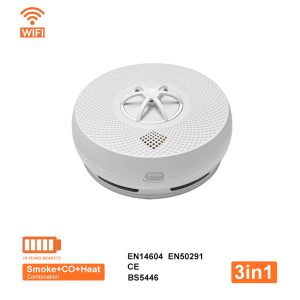
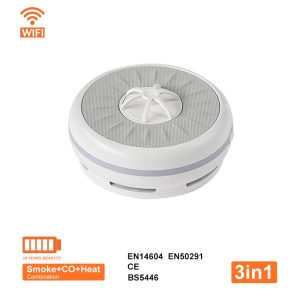
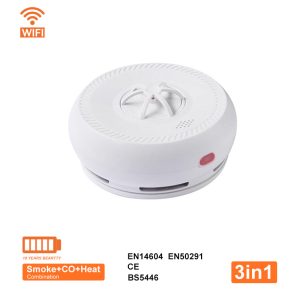
A wireless interconnected smoke alarm is a safety device powered by a sealed, built-in lithium battery. It uses radio frequency (RF) to communicate with other alarms throughout your home. The defining feature is simple: when one alarm detects smoke, all alarms sound simultaneously. This provides comprehensive protection, ensuring you can hear the alert no matter where the fire starts or where you are in the house.

KEY BENEFIT: One alarm triggers all alarms, giving your family critical extra minutes to escape.
Key Benefits of Wireless Interconnected Smoke Alarms
Compared to traditional hardwired or standalone battery units, wireless models offer significant advantages in safety, installation, and maintenance.
1. Effortless DIY Installation
Unlike hardwired smoke alarms that require an electrician to run cables through your walls, wireless units require no wiring at all. You can install them yourself in minutes using a drill and screws.
- No Electrician Needed: Save hundreds of dollars on installation costs.
- No Wall Damage: No need to tear into walls or ceilings to run interconnect wires.
2. Ultra-Large Coverage & Safety
Wireless interconnected alarms create a “mesh” of protection. If a fire starts in your basement or ground floor while you are sleeping on the top floor, the alarm nearest the fire will trigger every other alarm in the network. This “domino effect” ensures the alert reaches you immediately.
- Whole-Home Alert: Ideal for multi-storey homes, large houses, and properties with multiple bedrooms.
- Early Warning: Provides significantly more time to evacuate, especially for children, the elderly, or anyone with mobility issues.
3. Decade-Long Reliability (10-Year Battery)
Most modern wireless interconnected smoke alarms feature a sealed-in lithium battery designed to last the entire life of the device (10 years).
- No Battery Changes: Eliminates the annoying “chirping” low-battery warnings in the middle of the night.
- End-of-Life Indicator: The unit will alert you when it’s time to replace the entire device after 10 years.

Wireless vs. Hardwired vs. Standalone Alarms
| Feature | Wireless Interconnected | Hardwired Interconnected | Standalone (Battery) |
|---|---|---|---|
| Installation | DIY (No wires) | Professional Electrician Required | DIY (No wires) |
| Interconnection | Radio Frequency (RF) | Physical Cables | None (Single Unit) |
| Battery | 10-Year Sealed | Mains Powered (Battery Backup) | 9V or AA (Annual Changes) |
| Safety Level | Highest (Whole-home alert) | Highest (Whole-home alert) | Low (Only alerts in one room) |

Are Wireless Interconnected Alarms Safer?
Yes. A standalone alarm only protects the room it is in. If a fire starts in the kitchen but you are asleep upstairs with the door closed, you might not hear the alarm until it’s too late. Interconnected alarms “talk” to each other; if there is smoke in the kitchen, the alarm in your bedroom will sound immediately.
This is why safety authorities often recommend interconnected alarms for all residential dwellings, particularly those with multiple floors.
Compliance: AS3786 Standard
In Australia and New Zealand, smoke alarms must comply with the AS3786 standard. When purchasing wireless interconnected smoke alarms, ensure they are certified to AS3786. This guarantees the device has been tested for sensitivity, reliability, and performance. Many regions are moving toward legislation requiring interconnected alarms in all new and existing homes.
Do I Need to Install Wireless Interconnected Smoke Alarms?
If you live in a multi-storey home, a dwelling with multiple bedrooms, or a large single-story house, interconnected smoke alarms are the best option for protecting your loved ones. They offer a level of safety that standalone alarms simply cannot match.
Given the ease of installation (no electrician required) and the 10-year battery life, upgrading to wireless interconnected smoke alarms is one of the most cost-effective safety investments you can make.

FAQs: Wireless Smoke Alarms
Can I mix different brands of wireless smoke alarms?
Generally, no. Wireless interconnect technology uses specific radio frequencies unique to each manufacturer. You must use the same brand and model series to ensure they can “talk” to each other.
Do wireless smoke alarms work during a power outage?
Yes. Because they are powered by sealed lithium batteries (not your home’s electricity), they will continue to function during blackouts, which are often caused by severe weather—the same conditions that increase fire risk.






Leave A Comment