


When it comes to home safety, understanding the capabilities of your detectors is crucial. Many homeowners wonder: will a standard smoke detector detect carbon monoxide (CO)? The short answer is no – traditional smoke detectors are not designed to detect carbon monoxide gas.
Key Takeaway: Standard smoke detectors cannot detect carbon monoxide. You need separate CO detectors or combination smoke/CO detectors for complete protection against both fire and carbon monoxide hazards.
The Important Differences Between Smoke and CO Detectors
Smoke detectors and carbon monoxide detectors serve different purposes and use different technologies:
- Smoke detectors sense visible smoke particles or invisible combustion particles in the air using either ionization or photoelectric technology.
- CO detectors contain special sensors that detect the presence of carbon monoxide molecules in the air, typically using electrochemical, biomimetic, or metal oxide semiconductor sensors.
Why You Need Both Types of Detectors
Carbon monoxide is an odorless, colorless gas that can be deadly at high concentrations. Since you can’t see or smell it, detectors are your only warning system. Here’s why both are essential:
- Smoke detectors alert you to fires, giving you time to escape
- CO detectors warn you about this invisible poison that can cause illness or death before you even notice symptoms
- Many fatal CO poisonings occur during winter months when heating systems are in use and windows are closed
Combination Smoke and CO Detectors
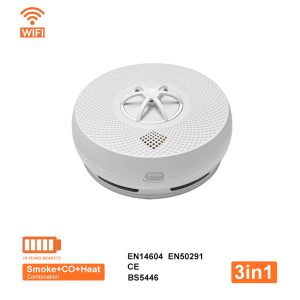
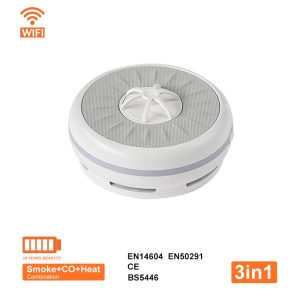
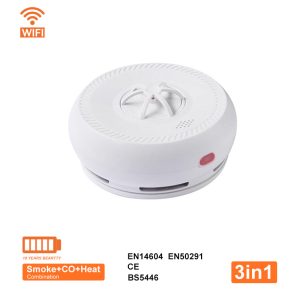
For convenience and comprehensive protection, you can purchase combination smoke and carbon monoxide detectors. These dual-function devices:
- Contain both smoke detection and CO detection technologies
- Provide distinct alarm patterns for smoke versus CO detection
- Are available in both battery-powered and hardwired models
- May offer additional features like voice alerts
Proper Placement of Detectors
For optimal protection:
- Smoke detectors should be installed on every level of your home, inside bedrooms, and outside sleeping areas
- CO detectors should be placed on every level (especially near sleeping areas) and about 5 feet above the floor since CO is roughly the same density as air
- Follow manufacturer’s instructions for specific placement recommendations
Maintenance and Testing
Both types of detectors require regular maintenance:
- Test detectors monthly by pressing the test button
- Replace batteries at least once a year (unless hardwired with battery backup)
- Replace smoke detectors every 10 years and CO detectors as recommended by manufacturer (typically 5-7 years)
- Vacuum detectors regularly to prevent dust buildup
Frequently Asked Questions
Can I tell if my current detector detects CO?
Check the labeling on your detector. CO detectors will clearly state they detect carbon monoxide, while smoke-only detectors won’t mention CO. Combination units will list both capabilities.
What does a carbon monoxide alarm sound like?
CO alarms typically sound with four quick beeps followed by five seconds of silence, repeated. This differs from smoke alarms which usually have three beeps in a row.
How many CO detectors do I need?
At minimum, you should have one CO detector on each level of your home, including the basement, and near sleeping areas. Larger homes may need additional units.







Leave A Comment